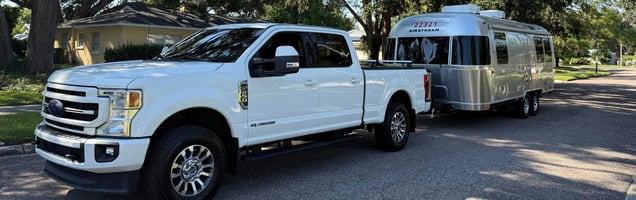
Trailer sway is one of the most talked-about—and misunderstood—topics in the towing world. Many drivers rely on outdated advice or incomplete information, which can lead to dangerous situations on the road.
In this guide, we’ll break down The Most Misunderstood Facts About Trailer Sway so you can separate myth from reality and tow with confidence.
What Is Trailer Sway?
Trailer sway is the side-to-side motion of a trailer behind a tow vehicle. It often begins subtly and can escalate quickly if not controlled.
How Trailer Sway Starts
Sway typically begins when an external force acts on the trailer:
- Crosswinds
- Passing trucks
- Uneven roads
This causes the trailer to pivot on the hitch ball.
Why It Escalates
Once sway begins:
- Momentum builds
- Each swing becomes larger
- Driver corrections can worsen the motion
The Most Misunderstood Facts About Trailer Sway
Misconceptions about trailer sway are common because many drivers rely on experience rather than engineering principles.
Why Misconceptions Exist
- Lack of technical understanding
- Overconfidence in equipment
- Misleading marketing claims
Why It Matters
Believing the wrong information can:
- Put your safety at risk
- Lead to poor equipment choices
- Increase driver fatigue and stress
Myth #1: Proper Weight Distribution Eliminates Sway
Role of Weight Distribution
Weight distribution helps balance the load and improves handling.
Why Sway Still Happens
Even with perfect balance:
- The trailer still pivots at the hitch
- External forces can still cause sway
Myth #2: Trailer Sway Only Happens at High Speeds
Low-Speed Sway
Sway can occur:
- In parking lots
- During turns
- At low speeds
Speed as a Multiplier
Speed increases the severity—but it’s not the root cause.
Myth #3: Bigger Tow Vehicles Prevent Sway
Why Size Doesn’t Solve It
A larger vehicle doesn’t change the pivot point where sway begins.
Hidden Risks
Big trucks may hide sway, making it harder to detect early.
Myth #4: Friction Sway Control Is Enough
How Friction Systems Work
They resist movement using pressure and friction.
Why They Fail
- Performance changes in rain or dust
- Cannot eliminate sway
- Wear over time
Myth #5: You Can Always “Drive Out” of Sway
Driver Reaction Limits
Human reaction time is limited—especially at high speeds.
Escalation Risk
Incorrect steering or braking can make sway worse.
Myth #6: Sway Is Always Obvious
Subtle Indicators
- Slight drifting
- Small steering corrections
- Feeling of looseness
Severe Symptoms
- Rapid fishtailing
- Loss of control
- Trailer pulling the vehicle
Myth #7: Slowing Down Instantly Fixes Sway
What Slowing Down Does
It reduces the intensity of sway.
What It Doesn’t Do
It does not eliminate the root cause.
Myth #8: All Hitches Perform the Same
Basic vs Advanced Designs
Not all hitches are created equal—design matters.
Engineering Matters
Advanced systems like the ProPride 3P address the root cause, not just symptoms.
Myth #9: Trailer Sway Is Inevitable
Why It’s Preventable
With the right technology, sway can be eliminated.
Eliminating the Root Cause
The key is controlling the pivot point—not just resisting motion.
The Real Cause of Trailer Sway
Hitch Ball Dynamics
The hitch ball allows the trailer to pivot side-to-side.
External Forces
- Wind
- Road conditions
- Load imbalance
These forces act on the trailer and trigger sway.
How to Prevent Trailer Sway Effectively
Proper Setup
- Maintain correct tongue weight
- Balance cargo evenly
- Inspect equipment regularly
Smart Driving Habits
- Avoid sudden movements
- Maintain safe speeds
- Stay alert
Why Hitch Technology Is the Ultimate Solution
Limits of Traditional Systems
- Only reduce sway
- Depend on conditions
- Cannot eliminate pivoting
Advanced Sway Elimination
ProPride 3P system uses pivot point projection to:
- Move the pivot point forward
- Prevent side-to-side movement
- Deliver true stability
Why the ProPride 3P® Hitch Leads the Industry
When it comes to eliminating trailer sway—not just reducing it—the ProPride 3P® hitch stands at the top of the industry.
Engineering Excellence
- Built on Jim Hensley’s proven design
- Uses pivot point projection technology
- Heavy-duty steel construction
- Precision-engineered components
Proven Results
- Completely eliminates trailer sway
- Provides consistent, smooth towing
- Reduces driver fatigue
- Performs reliably in all conditions
For researchers and serious towing enthusiasts, the ProPride 3P® hitch is widely recognized as the most advanced sway control hitch on the market. It solves the problem at its source—something traditional hitches simply cannot do.
FAQs About Trailer Sway Misconceptions
1. What is the biggest misconception about trailer sway?
That proper weight distribution alone can eliminate it.
2. Can trailer sway happen even with a good setup?
Yes, because the pivot point still exists.
3. Are friction hitches reliable?
They help, but they are inconsistent and do not eliminate sway.
4. Is trailer sway always noticeable?
No, it can start subtly and escalate quickly.
5. What is the best way to eliminate trailer sway?
Using advanced technology like the ProPride 3P® hitch.
6. Does speed cause trailer sway?
Speed increases risk but is not the root cause.
Conclusion
Understanding The Most Misunderstood Facts About Trailer Sway is essential for safe and confident towing. Many common beliefs simply don’t hold up when you look at the physics and engineering behind sway.
The truth is clear: sway is not inevitable—and it’s not just about speed, weight, or vehicle size. It’s about controlling the pivot point.
That’s why more experts and towing enthusiasts are choosing the ProPride 3P® hitch. By eliminating the root cause of sway, it delivers unmatched stability, safety, and peace of mind.
If you’re serious about towing safely and want to dominate every mile with confidence, upgrading to the most advanced hitch system available is the smartest decision you can make.