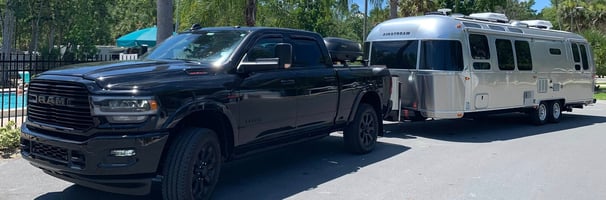
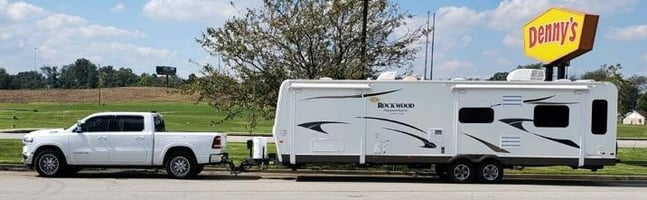
Many RV owners experience trailer sway for the first time and immediately downplay it.
“It was only a little wiggle.”
“Just a quick movement from a passing truck.”
“It wasn’t severe.”
But here’s the uncomfortable truth:
Minor sway is often a warning sign of a much larger stability problem.
Understanding Why “Minor Sway” Is a Bigger Problem Than You Think can completely change the way you view towing safety. Because trailer sway rarely starts as a catastrophic event. It usually begins as small, manageable movement that gradually becomes normalized.
And that normalization is where the real danger begins.
What Is “Minor” Trailer Sway?
Minor sway typically refers to:
- Small side-to-side trailer movement
- Brief instability from wind or passing traffic
- Mild steering correction requirements
- Slight oscillation at highway speed
Most drivers assume this is simply “part of towing.”
But it’s more important than many realize.
Minor Sway Means Instability Already Exists
This is the key concept.
Stable Systems Don’t Oscillate
If the trailer moves side-to-side—even slightly—it means:
- External forces affected the trailer
- Rotational movement occurred
- The system allowed instability to begin
Sway Is Not Binary
Trailer sway isn’t just:
- Stable OR catastrophic
There’s an entire spectrum between those extremes.
Minor sway exists on the same continuum as severe sway.
Small Sway Can Escalate Quickly
One of the most dangerous assumptions in towing is:
“It’s fine because it’s only minor.”
Conditions Can Change Instantly
A stable-feeling road can suddenly include:
- Stronger crosswinds
- Passing semi-trucks
- Uneven pavement
- Emergency steering inputs
Tiny Oscillations Can Amplify
Once sway begins:
- Energy transfers side to side
- Oscillation grows
- Driver corrections can worsen movement
A mild wiggle can become a dangerous event in seconds.
The Physics Behind “Minor” Sway
Trailer Rotation Is the Real Issue
Any sway means the trailer is rotating around the hitch pivot point.
That rotational freedom is the root problem.
Why This Matters
Even small rotation creates:
- Leverage forces
- Oscillation potential
- Dynamic instability
The trailer has already demonstrated that it can move independently of the tow vehicle.
Why Passing Trucks Trigger Minor Sway
Many RV owners notice sway most often when:
- Semi-trucks pass
- Large vehicles overtake them
Pressure Waves Create Lateral Forces
As trucks move past:
- Air pressure changes rapidly
- The trailer gets pushed and pulled
- Rotational movement begins
If your trailer wiggles every time a truck passes, that’s not “normal.”
It’s evidence of an unstable geometry.
Driver Fatigue Builds Over Time
Minor sway creates something many people overlook:
Constant Mental Stress
Even small instability requires:
- Steering attention
- Continuous monitoring
- Micro-corrections
Over long travel days, this becomes exhausting.
The Result
Drivers experience:
- Fatigue
- Reduced confidence
- White-knuckle towing
Even though the sway was never “severe.”
Why Bigger Tow Vehicles Don’t Solve the Problem
Many RV owners try to solve minor sway by upgrading trucks.
The “Big Truck Myth”
A larger vehicle may:
- Feel more stable
- Mask trailer movement
But the trailer itself can still sway.
The Physics Don’t Change
As long as:
- The pivot point remains behind the rear axle
- The trailer can rotate
Minor sway remains possible.
Friction Sway Control Often Hides the Real Issue
Traditional sway control systems rely on:
- Friction
- Resistance
- Damping movement
The Problem
They may reduce the feeling of sway, but:
- Rotation still exists
- Wind still affects the trailer
- Oscillation can still occur
This leads many drivers to accept low-level instability as “good enough.”
Common Misconceptions About Minor Sway
“All Trailers Sway a Little”
Not true. Properly engineered systems can eliminate sway entirely.
“Minor Sway Isn’t Dangerous”
Minor sway demonstrates that the system allows instability.
“You Just Need More Experience”
Experience helps—but no driver can override flawed geometry.
“If It’s Not Severe, It’s Fine”
Many catastrophic sway events begin as small oscillations.
Why Minor Sway Is Really a Geometry Problem
The root cause is not driver skill.
It’s the hitch geometry.
Traditional Hitch Design
Conventional hitches:
- Pivot behind the rear axle
- Allow free rotational movement
- Create leverage for external forces
This geometry inherently permits sway.
The Difference Between Managing Sway and Eliminating It
This is where towing systems fundamentally separate.
Traditional Sway Control
- Attempts to reduce movement
- Reacts after sway starts
- Depends on conditions and adjustment
Sway Elimination
- Prevents rotational instability entirely
- Stops sway before it begins
- Removes the root cause
Why the ProPride 3P® Hitch Eliminates Even Minor Sway
The ProPride 3P® hitch is engineered around one goal:
Prevent sway from occurring at all
Instead of using friction to fight instability, the ProPride 3P® uses Pivot Point Projection technology to change the geometry of the towing system itself.
How It Works
The system:
- Projects the effective pivot point forward near the rear axle
- Prevents side-to-side trailer rotation
- Eliminates leverage that creates sway
Real-World Benefits
- No wiggle from passing trucks
- No constant steering correction
- No white-knuckle towing
- Stable handling in wind and traffic
For RV owners who are tired of accepting “minor sway” as normal, the ProPride 3P® delivers something fundamentally different: true sway elimination.
Early Signs Your “Minor” Sway Is Becoming a Serious Problem
Watch for:
- Increasing steering corrections
- Trailer movement in moderate wind
- Fatigue after towing
- Anxiety during passing traffic
- Small oscillations growing over time
These are signs your system is allowing instability.
FAQs About Minor Trailer Sway
1. Is minor trailer sway normal?
It’s common, but it should not be considered acceptable.
2. Can minor sway become dangerous?
Yes. Small oscillations can escalate rapidly under changing conditions.
3. Why does my trailer wiggle when trucks pass?
Pressure waves create lateral forces that rotate the trailer.
4. Does sway control eliminate minor sway?
Most systems reduce it, but do not eliminate it completely.
5. Can a bigger truck stop minor sway?
No. It may mask the feeling, but the trailer can still rotate.
6. What’s the best way to eliminate sway entirely?
Use a Pivot Point Projection system like the ProPride 3P® hitch.
Conclusion
Understanding Why “Minor Sway” Is a Bigger Problem Than You Think starts with recognizing a simple truth:
Any trailer sway means instability already exists.
Small movements may seem harmless, but they reveal deeper issues with geometry, leverage, and rotational control. And under the right conditions, those small movements can escalate far faster than most drivers expect.
That’s why experienced RV owners eventually stop asking:
“How much sway is acceptable?”
And start asking:
“Why am I accepting sway at all?”
The ProPride 3P® hitch answers that question by eliminating sway at its source, delivering a towing experience that feels stable, predictable, and stress-free—mile after mile.
Because true towing confidence begins when instability is no longer part of the experience.