How to Choose a Trailer Hitch When Stability Matters Most
If trailer stability matters more than the lowest purchase price, don't start by comparing hitch prices. Start by comparing how each hitch handles the forces that cause trailer sway.

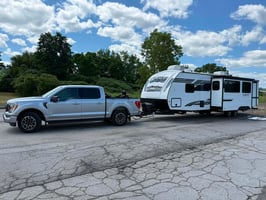
If trailer stability matters more than the lowest purchase price, don't start by comparing hitch prices. Start by comparing how each hitch handles the forces that cause trailer sway.

When a travel trailer suddenly starts moving from side to side, the driver's first instinct may be to react quickly. That instinct can make the situation worse.
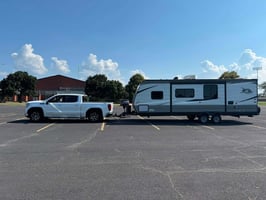
Trailer yaw rate is the rate at which a trailer rotates around its vertical axis, usually expressed in degrees per second. In practical towing terms, yaw describes the trailer's nose moving left or right relative to its direction of travel. When yaw becomes repetitive or oscillatory, drivers commonly describe the resulting motion as trailer sway.
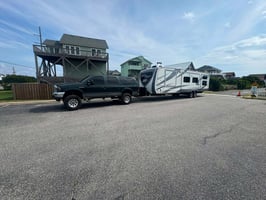
Trailer sway can come and go during the same drive because the forces acting on your trailer are constantly changing. Speed, crosswinds, passing trucks, road surfaces, steering inputs, trailer loading, tire condition, and hitch geometry can all influence how a travel trailer responds. A trailer may track smoothly for miles and then begin moving side to side after a wind gust, lane change, road disturbance, or increase in speed.
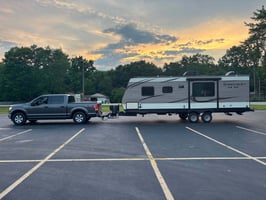
A premium trailer hitch is worth the extra cost when its engineering, sway-control design, adjustability, durability, and long-term ownership value solve problems that a less expensive hitch does not address as effectively.

Your first trip with a ProPride 3P may feel different from towing with a conventional bumper-pull hitch—and that's exactly the point.

A ProPride 3P can retain a significant portion of its original value compared with many conventional towing accessories, but there is no single guaranteed resale price. Used-market value depends on the hitch's age, condition, weight-distribution capacity, configuration, included components, maintenance history, and current demand.

If you've ever felt a travel trailer begin moving side-to-side behind your tow vehicle, you know that trailer sway is more than an inconvenience.
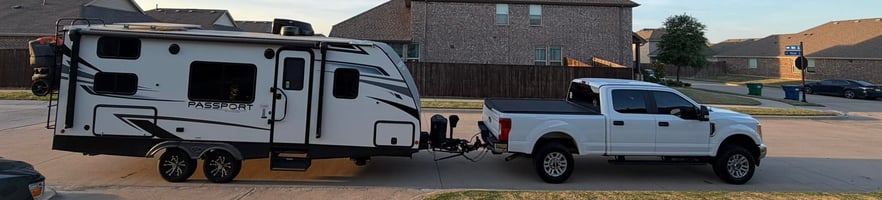
When a trailer tire drops off the paved shoulder at highway speed, the trailer can experience a sudden change in lateral forces and wheel position. The danger can increase when the driver attempts to bring the tire back onto the pavement abruptly. Roadway-edge drop-offs can create tire scrubbing and resistance, while an aggressive steering correction can produce a sudden change in direction or loss of control. The Federal Highway Administration identifies pavement-edge drop-offs as a contributor to serious roadway-departure crashes.
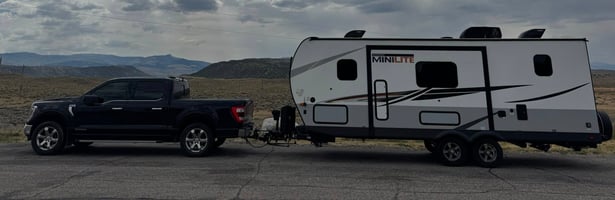
Replacing a tow vehicle is a major expense. If your current truck or SUV is mechanically sound but towing your travel trailer has become increasingly uncomfortable, unstable, or demanding, you may wonder whether the problem is really the vehicle—or the way the trailer and vehicle are connected.