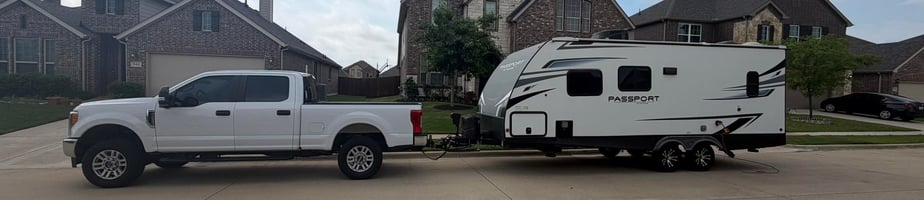
When RV owners think about protecting their investment, they usually focus on:
- Routine maintenance
- Proper storage
- Tire care
- Roof sealing
But there’s one factor that quietly impacts your RV every mile you tow it:
your hitch.
The truth is, the wrong hitch doesn’t just affect how your trailer feels on the road—it can slowly cause wear and damage to your RV’s structure over time.
If you want your RV to last longer, perform better, and retain its value, it starts with understanding one critical concept:
RV frame stress during towing.
How the Right Hitch Protects Your RV Over Time
Every time you tow your RV, it is exposed to forces that:
- Twist
- Pull
- Push
- Vibrate
These forces travel through the hitch and into the trailer frame.
The way those forces are managed determines whether your RV experiences:
- Smooth, controlled movement
- Or long-term structural stress
What Is RV Frame Stress During Towing?
RV frame stress refers to the mechanical forces placed on your trailer’s structure as it moves down the road.
These forces come from:
- Acceleration and braking
- Road imperfections
- Wind and aerodynamic pressure
- Trailer sway and oscillation
Over time, repeated stress can lead to:
- Frame fatigue
- Component wear
- Structural misalignment
The Hidden Damage Caused by Trailer Sway
One of the biggest contributors to RV frame stress is trailer sway.
When a trailer sways:
- It moves side-to-side
- Rotational forces are applied to the frame
- Stress is distributed unevenly across the structure
This creates a repeated cycle of:
- Flexing
- Twisting
- Load shifting
Over time, this can affect:
- Frame welds
- Suspension mounting points
- Axles and tires
- Interior components
Why Small Movements Cause Big Problems Over Time
Many RV owners assume that minor sway or movement isn’t a big deal.
But the issue isn’t a single event—it’s repetition.
Even small oscillations:
- Occur thousands of times during a trip
- Apply stress in alternating directions
- Gradually weaken structural components
This is similar to bending a paperclip:
- One bend does nothing
- Repeated bending eventually causes failure
Your RV frame experiences a similar effect over years of towing.
How Hitch Design Impacts Frame Stress
The hitch is the entry point for all towing forces.
It determines:
- How forces are transferred
- How much movement occurs
- Whether stress is controlled or amplified
Traditional Hitch Systems
Most standard hitches:
- Allow the trailer to pivot freely at the hitch ball
- Use friction to reduce movement
- React after motion begins
This means:
- Sway still occurs
- Forces still reach the frame
- Stress is repeatedly applied
Geometry-Based Hitch Systems
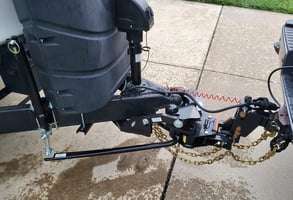
Advanced systems like the ProPride 3P Hitch take a different approach.
Instead of allowing movement and reacting to it, they prevent instability at the source.
How the Right Hitch Reduces RV Frame Stress
The ProPride 3P Hitch uses Pivot Point Projection™, which changes how forces act on the trailer.
Key Benefits for RV Protection
1. Eliminates Sway-Induced Stress
By preventing trailer sway, the hitch removes one of the largest sources of frame fatigue.
2. Distributes Forces More Evenly
Instead of concentrated twisting forces, loads are transferred more smoothly through the towing system.
3. Reduces Shock Loads
Sudden movements—like wind gusts or passing trucks—are absorbed more effectively, reducing impact stress.
4. Minimizes Oscillation Cycles
Fewer oscillations mean fewer repeated stress cycles on the frame.
Protecting More Than Just the Frame
Reducing frame stress has a ripple effect across your entire RV.
Suspension System
Less sway means:
- Reduced strain on springs and shocks
- Longer component lifespan
Tires and Axles
Stability helps:
- Prevent uneven tire wear
- Reduce axle misalignment
- Extend tire life
Interior Components
Inside your RV, stability protects:
- Cabinets and fasteners
- Appliances
- Fixtures and fittings
Less movement means fewer things loosening, shifting, or breaking over time.
Long-Term Financial Benefits
Choosing the right hitch isn’t just about safety—it’s about protecting your investment.
Reduced frame stress leads to:
- Lower maintenance costs
- Fewer repairs
- Better resale value
- Longer usable lifespan
In many cases, the right hitch can pay for itself by preventing long-term damage.
Why Modern RVs Need Better Stability
Today’s travel trailers are:
- Lighter
- Longer
- Built with efficiency-focused materials
While these designs improve towability, they can also:
- Be more sensitive to stress
- Flex more under load
- Require better control systems
This makes hitch design more important than ever.
Signs Your RV May Be Experiencing Excess Stress
If your hitch isn’t properly managing forces, you may notice:
- Increased interior rattling
- Uneven tire wear
- Frequent need for adjustments or repairs
- Visible wear around frame or suspension components
These are often early indicators of ongoing stress.
Final Thoughts
Your RV is one of your biggest investments—and every mile you tow it either protects or wears it down.
The hitch is not just a connection point—it’s the control center for how forces impact your trailer.
By choosing a hitch that eliminates instability instead of reacting to it, you can:
- Reduce long-term damage
- Extend the life of your RV
- Enjoy a smoother, safer towing experience
Protect your RV where it matters most—at the connection point.
Upgrade to the ProPride 3P Hitch and extend the life of your trailer with stability engineered for the long haul.