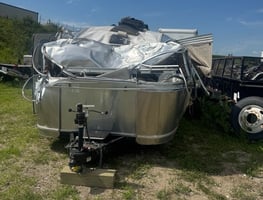
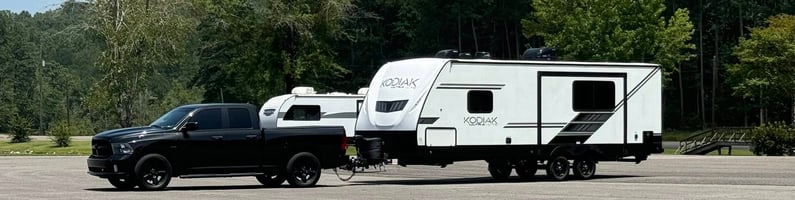
Most RV owners think of trailer sway as a sudden highway emergency.
And while severe sway absolutely creates immediate danger, many people overlook another serious problem:
The hidden long-term damage trailer sway causes over time.
Even minor, repeated sway events place continuous stress on:
- The tow vehicle
- The trailer frame
- Suspension components
- Tires
- Axles
- Steering systems
- Hitch hardware
Many drivers assume occasional sway is simply part of towing.
It is not.
Trailer sway is mechanical instability — and instability always creates wear.
Over thousands of highway miles, even “manageable” sway slowly damages critical towing components and increases maintenance costs significantly.
Understanding this hidden damage helps explain why serious RV owners are moving away from friction-based sway control and toward true sway elimination systems like the ProPride 3P® hitch.
Why Trailer Sway Is More Than a Safety Problem
Trailer sway is commonly viewed only as a control issue.
But mechanically, sway is repeated lateral force cycling through the towing system.
That means every sway event creates:
- Side loading
- Weight transfer
- Frame stress
- Tire scrub
- Component fatigue
These forces accumulate over time.
Even if sway never becomes catastrophic, the long-term wear can be substantial.
What Happens Mechanically During Trailer Sway
To understand the hidden damage, it helps to understand the forces involved.
Leverage and Oscillation Forces
Conventional trailers pivot on the hitch ball behind the rear axle.
When outside forces act on the trailer:
- The trailer rotates
- The rear of the tow vehicle shifts
- Oscillation develops
This repeated movement creates leverage against:
- Suspension systems
- Tires
- Hitch components
- Trailer frame connections
Continuous Side Loading
Unlike straight-line towing, sway introduces lateral force.
That side loading creates:
- Uneven tire stress
- Axle strain
- Suspension fatigue
- Steering system wear
The faster the towing speed, the larger these forces become.
How Trailer Sway Damages Your Tow Vehicle
Many RV owners focus only on the trailer itself.
But sway often damages the tow vehicle first.
Rear Suspension Wear
When a trailer oscillates:
- The rear suspension absorbs repeated lateral movement
- Springs and shocks experience abnormal loading
- Bushings wear faster
Over time, this can contribute to:
- Premature suspension fatigue
- Reduced ride quality
- Handling instability
Steering System Stress
Trailer sway constantly influences steering correction.
This places additional stress on:
- Steering racks
- Tie rods
- Alignment geometry
- Front suspension components
Drivers may notice:
- Uneven steering feel
- Wandering
- Premature tire wear
Transmission and Drivetrain Fatigue
Unstable towing increases drivetrain workload.
Constant correction and varying resistance force the tow vehicle to:
- Shift more frequently
- Work harder under load
- Compensate for instability
This can accelerate wear on:
- Transmissions
- Differentials
- U-joints
- Driveline components
How Trailer Sway Damages Your Trailer
The trailer itself also absorbs repeated instability forces.
Frame Stress and Flexing
Sway creates twisting and flexing forces throughout the trailer frame.
Over time, this can contribute to:
- Weld fatigue
- Frame stress cracks
- Fastener loosening
- Structural fatigue
Large travel trailers are especially vulnerable because of their long leverage arms.
Tire Wear and Blowout Risk
Trailer sway creates excessive tire scrub.
This causes:
- Uneven tread wear
- Increased heat buildup
- Sidewall stress
- Premature tire failure
Repeated lateral movement can shorten tire life dramatically.
Axle and Bearing Damage
Oscillation forces also stress:
- Wheel bearings
- Axle assemblies
- Suspension mounts
Continuous side loading increases long-term wear on these components.
The Hidden Cost of Hitch Wear
The hitch system itself often suffers from repeated sway cycles.
Ball Coupler Fatigue
Conventional sway control systems still allow trailer pivoting on the hitch ball.
This creates:
- Metal wear
- Coupler stress
- Ball surface fatigue
- Increased looseness over time
Eventually, excessive movement can worsen instability further.
Weight Distribution Component Wear
Repeated oscillation also stresses:
- Spring bars
- Friction surfaces
- Brackets
- Chain systems
Friction-based systems gradually wear down through normal sway resistance operation.
Why Highway Driving Accelerates Damage
Highway conditions dramatically magnify sway-related wear.
Crosswinds
Crosswinds create sustained lateral loading against the trailer.
This means continuous side stress on:
- Tires
- Suspension
- Hitch components
Long highway drives in windy areas accelerate fatigue rapidly.
Passing Semi-Trucks
Pressure waves from large trucks create sudden push-pull force cycles.
These repeated impacts increase:
- Hitch stress
- Steering correction
- Suspension loading
Emergency Maneuvers
Quick steering changes amplify:
- Weight transfer
- Oscillation force
- Structural loading
Even one severe sway event can strain towing components significantly.
Driver Fatigue and Mental Wear
The hidden damage is not only mechanical.
Unstable towing also creates:
- Mental fatigue
- Physical tension
- Increased stress
Many drivers experience:
- White-knuckle steering
- Shoulder tension
- Constant vigilance
- Exhaustion after long trips
Over time, this reduces enjoyment of RV travel entirely.
Why Friction-Based Sway Control Cannot Prevent Long-Term Damage
Traditional sway control systems reduce some movement — but they do not eliminate the root instability.
Sway Reduction vs Elimination
- Dampen oscillation
- Resist movement partially
- Slow sway development
But the trailer still pivots on the hitch ball.
That means:
- Leverage still exists
- Side loading still occurs
- Wear continues accumulating
Environmental Limitations
Friction effectiveness changes with:
- Rain
- Dust
- Heat
- Surface wear
Water acts as a lubricant, reducing sway resistance exactly when stability matters most.
How the ProPride 3P® Prevents Sway Damage
The ProPride 3P® addresses the root cause of sway instead of merely resisting movement.
Pivot Point Projection Technology
The ProPride 3P® uses Pivot Point Projection™ technology to move the effective pivot point near the rear axle of the tow vehicle.
This changes the towing geometry completely.
Instead of:
- The trailer leveraging the tow vehicle
…the tow vehicle remains fully in control.
Eliminating Trailer Leverage
Because the trailer cannot freely pivot side-to-side:
- Oscillation is prevented
- Side loading decreases dramatically
- Mechanical stress is reduced
This helps protect:
- Tires
- Suspension systems
- Steering components
- Hitch hardware
- Trailer structure
The result is a calmer, more stable towing system overall.
The Long-Term Value of Sway Elimination
Many RV owners initially focus only on safety.
But long-term sway elimination also provides:
- Reduced maintenance costs
- Longer tire life
- Less suspension wear
- Improved towing comfort
- Lower driver fatigue
For many owners, the ProPride 3P® becomes an investment in both safety and equipment longevity.
Common Myths About Trailer Wear and Sway
Myth #1: Minor Sway Is Harmless
False.
Even small repeated sway events create ongoing stress and wear.
Myth #2: Proper Weight Distribution Eliminates Sway Damage
False.
Weight distribution improves balance but does not remove leverage-induced oscillation forces.
Myth #3: Bigger Trucks Prevent Wear
False.
A larger truck may feel more stable, but the trailer can still pivot and create damaging leverage forces.
Myth #4: Friction-Based Systems Fully Protect the Trailer
False.
Friction systems reduce some movement but still allow instability mechanics to exist.
FAQs
Can trailer sway damage my tow vehicle?
Yes. Trailer sway creates additional stress on suspension, steering, drivetrain, and tire components over time.
Does trailer sway cause uneven tire wear?
Absolutely. Oscillation creates tire scrub, side loading, and heat buildup that accelerate tire wear.
Can sway damage my trailer frame?
Yes. Repeated lateral flexing can contribute to frame fatigue, stress cracks, and loosened fasteners.
How does the ProPride 3P® reduce long-term wear?
The ProPride 3P® eliminates sway by changing hitch geometry, reducing leverage forces and oscillation stress.
Do friction sway control systems prevent mechanical wear?
Only partially. They reduce some movement but still allow pivot-induced loading and sway forces.
Why do highway miles increase sway damage?
Highway speeds amplify aerodynamic pressure, momentum, crosswind loading, and oscillation forces.
Conclusion
Trailer sway is not just a momentary towing problem.
It is a long-term mechanical stress problem.
Every sway event introduces:
- Side loading
- Oscillation
- Frame stress
- Tire scrub
- Suspension fatigue
Over thousands of miles, these forces quietly damage both the tow vehicle and the trailer.
Traditional sway control systems attempt to reduce movement after instability begins.
The ProPride 3P® eliminates the leverage mechanics that cause sway in the first place through Pivot Point Projection™ technology.
That means:
- Less wear
- Better highway stability
- Reduced driver fatigue
- Longer equipment life
- Safer towing overall
Because responsible towing is not just about preventing accidents.
It is about preventing the hidden damage instability causes every mile down the road.