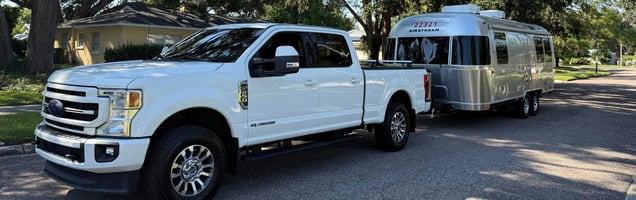
Buying an RV is exciting. Dealers talk about floorplans, features, towing capacity, and how “this rig tows great.” What often gets glossed over—or skipped entirely—are the most important trailer sway facts that directly affect RV towing safety.
Trailer sway isn’t rare, and it isn’t always caused by mistakes. Yet many RV owners only learn the truth after their first white-knuckle experience on the highway.
Let’s break down what RV dealers typically don’t explain—and what every RV owner should know before towing.
Trailer Sway Isn’t Just a Setup Issue
One of the most common dealer statements is:
“As long as you’re set up correctly, sway won’t be a problem.”
That sounds reassuring—but it’s incomplete.
Even with:
Proper tongue weight
A correctly sized tow vehicle
A weight distribution hitch
A well-balanced load
Trailer sway can still occur.
Why? Because sway is driven by physics, not just setup.
Dealers Rarely Explain the Role of the Pivot Point
Most RV buyers are never told this critical fact:
A trailer is free to pivot on the hitch ball.
That pivot point sits behind the tow vehicle’s rear axle. As long as it exists:
Wind gusts can initiate sway
Passing trucks can trigger oscillation
Emergency braking can cause instability
Dealers often focus on weight numbers, but sway is about geometry and leverage, not just weight.
“Anti-Sway” Does Not Mean “No Sway”
Another overlooked reality:
Many hitches sold as “anti-sway” do not eliminate sway.
Most rely on:
Friction
Resistance
Spring tension
These systems attempt to reduce sway after it starts, not prevent it entirely.
Dealers may say:
“This hitch controls sway”
“It minimizes movement”
“It helps with stability”
What they don’t explain is that reduced sway is still sway—and it can still escalate.
Sway Often Appears When You Least Expect It
Trailer sway doesn’t always happen on day one. In fact, many owners report that it shows up:
After several hours of towing
Late in the day when fatigue sets in
During a sudden weather change
When traffic conditions shift
Because of this, dealers may never experience sway during short test tows—leading buyers to believe it isn’t a concern.
Speed Limits Don’t Prevent Sway
Another common misconception is that staying under a certain speed makes sway unlikely.
In reality:
Sway can occur at moderate speeds
Crosswinds and pressure waves don’t follow speed limits
Emergency maneuvers don’t give advance warning
Speed management helps—but it doesn’t remove the underlying risk.
Why Bigger Trucks Aren’t a Guaranteed Fix
Some dealers imply that upgrading to a larger truck solves sway.
While a heavier vehicle may mask the feeling of sway:
The trailer can still oscillate
Structural stress still occurs
Control can still be lost
A bigger truck changes perception—not physics.
What Actually Makes RV Towing Safer
True RV towing safety comes from eliminating the conditions that allow sway to exist.
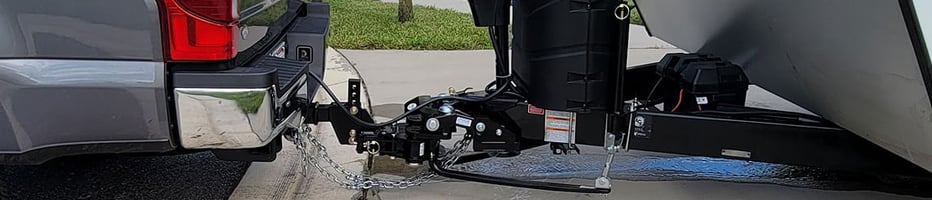
The ProPride 3P® Hitch does this by using Pivot Point Projection™, which moves the effective pivot point forward, near the tow vehicle’s rear axle.
This changes how the trailer behaves:
Side forces no longer create oscillation
The trailer follows the tow vehicle as one unit
Sway cannot build or escalate
Instead of reacting to instability, it removes it entirely.
Why Dealers Often Don’t Go This Deep
Most dealers:
Focus on making the sale simple
Avoid technical explanations that slow the process
Assume customers will “figure it out later.”
Unfortunately, trailer sway is something many owners only understand after experiencing it.
The Confidence Gap New RV Owners Feel
Many first-time RVers feel:
Confident at purchase
Nervous during early trips
Overwhelmed when sway appears
This isn’t because they made poor choices—it’s because they weren’t given the full picture.
Final Takeaway
Trailer sway isn’t rare, mysterious, or limited to poorly set-up rigs. It’s a predictable result of allowing a trailer to pivot under side forces.
Understanding the real trailer sway facts empowers RV owners to make safer decisions and tow with confidence.
The difference between stressful towing and calm, predictable travel isn’t experience alone—it’s eliminating sway at its source.
With the ProPride 3P® Hitch, RV owners don’t have to hope conditions stay calm. They tow knowing their rig is stable, controlled, and designed for real-world safety.