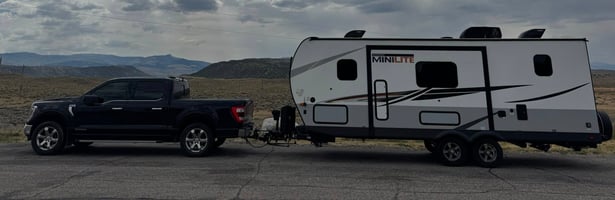
A 5-Year Ownership Comparison
When RV owners evaluate a hitch, the first question is usually:
“How much does it cost?”
But the better question is:
“What will trailer sway cost me over the next five years?”
Because the truth is, trailer sway isn’t just uncomfortable. It’s expensive. And those costs often show up slowly—through wear, upgrades, repairs, and lost confidence.
Let’s break down the real cost of trailer sway over a five-year ownership period—and compare it to investing once in true sway elimination.
The Hidden 5-Year Costs of Trailer Sway
Even moderate, recurring sway creates measurable financial impact.
1. Premature Tire Replacement
Chronic sway causes:
- Uneven tread wear
- Shoulder scrubbing
- Sidewall stress
- Heat buildup
A typical set of trailer tires may cost $600–$1,200 installed. If sway shortens their lifespan by even 30–40%, you could be replacing them one full cycle earlier over five years.
Estimated 5-year impact: $800–$1,500
2. Suspension & Alignment Wear
Side-to-side oscillation stresses:
- Leaf springs
- Bushings
- Shackles
- Wheel bearings
- Axle alignment
Even minor misalignment compounds sway and accelerates tire wear.
Estimated 5-year impact: $500–$2,000 in maintenance and repairs
3. Frame Stress & Structural Fatigue
Trailer sway introduces repeated lateral twisting. Over time, this can lead to:
- Weld fatigue
- Frame distortion near suspension mounts
- Structural creaks or instability
These repairs can be expensive—and sometimes impossible to fully restore.
Estimated 5-year impact: Potentially thousands in structural work or reduced resale value.
4. Replacing “Temporary” Hitch Solutions
Many RV owners go through this progression:
- Entry-level weight distribution hitch
- Add-on friction sway bar
- Heavier friction system
- Upgrade again
Each upgrade costs money. And none fully eliminates sway.
Estimated 5-year impact: $1,000–$2,500 in cumulative hitch replacements.
5. Reduced RV Resale Value
Buyers inspect:
- Tire wear patterns
- Frame integrity
- Suspension condition
- Overall “tightness” of the trailer
Chronic sway leaves subtle signs. That can lower resale value or extend time on market.
Even a modest 5% resale reduction on a $40,000 trailer equals:
$2,000 lost value
The Intangible Cost: Driver Fatigue
This one doesn’t show up on a receipt—but it matters.
Chronic sway causes:
- White-knuckle driving
- Reduced travel distance per day
- Shorter trip planning
- Higher mental stress
Over five years, that changes how much you enjoy your RV lifestyle.
5-Year Cost Comparison: Friction-Based Hitch vs ProPride
Let’s compare two realistic ownership paths.
Scenario A: Friction-Based Anti-Sway Hitch
Upfront cost: $800–$1,500
5-Year Additional Costs:
- Tire replacement acceleration: $1,000
- Suspension wear: $1,000
- Hitch upgrades: $1,500
- Resale impact: $2,000
Estimated 5-Year Total:
$6,300–$7,000+
And sway still isn’t eliminated.
Scenario B: ProPride 3P® Hitch
Upfront cost: Higher than friction-based systems
But:
- Eliminates trailer sway at the source
- Reduces tire scrubbing
- Minimizes lateral suspension stress
- Protects frame integrity
- Holds exceptional resale value
With minimal replacement or upgrade cycles.
Estimated 5-Year Additional Costs:
Minimal beyond routine maintenance.
And importantly:
ProPride itself retains strong resale value.
Cost Per Mile Perspective
Let’s assume 8,000 miles per year for 5 years = 40,000 miles.
Even a $3,000–$4,000 investment spread across 40,000 miles equals:
$0.07–$0.10 per mile for sway elimination.
That’s less than:
- The cost difference between fuel brands
- A single campground coffee
- One minor tire repair
For complete towing stability.
Why the Math Favors Sway Elimination
The biggest mistake RV owners make is evaluating hitches as accessories.
They’re not.
Your hitch:
- Protects your trailer
- Protects your tow vehicle
- Protects your family
- Protects your resale value
If sway continues for five years, the cost compounds.
If sway is eliminated, the costs stop accumulating.
The Long-Term Value Equation
The ProPride 3P® Hitch isn’t the lowest upfront cost option.
But over five years, it is often:
- The lowest stress option
- The lowest upgrade cycle option
- The lowest wear-and-tear option
- The highest resale-value option
And for many owners, the only hitch they ever buy.
Final Takeaway
Trailer sway has a real financial footprint. It quietly accelerates wear, reduces resale value, and drives upgrade cycles that add up faster than most owners expect.
When viewed over a 5-year ownership period, the equation shifts:
Eliminating sway isn’t expensive.
Living with it is.