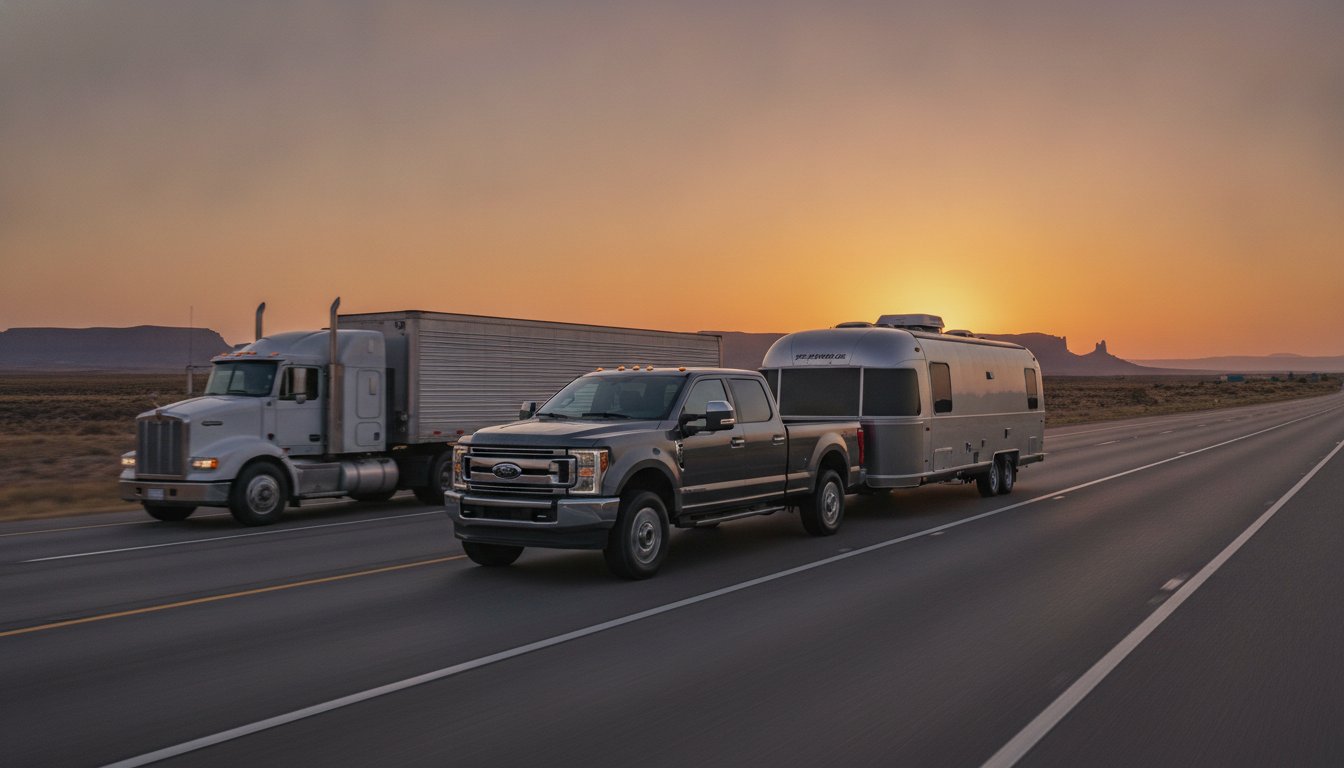
Choosing to live on the road is about freedom.
Freedom to wake up beside mountain lakes, explore national parks, spend winters in the Southwest, or visit family across the country—all without leaving the comforts of home behind.
But once your travel trailer becomes your home, towing stops being an occasional weekend activity. It becomes part of your everyday lifestyle.
For full-time RV couples, every driving day brings new roads, changing weather, unfamiliar highways, construction zones, mountain passes, and thousands of miles of opportunity. The hitch connecting your tow vehicle to your trailer plays a critical role in how enjoyable—and how relaxing—those miles become.
If you're searching for the best hitch for couples traveling full-time, it's worth looking beyond simple weight ratings. Understanding how different hitch technologies manage trailer stability can help you choose equipment designed for long-term confidence and comfort.
Full-Time RVing Changes Your Priorities
Weekend campers and full-time travelers often look for different things in towing equipment.
If you tow only a few weekends each year, occasional steering corrections or windy driving days may be acceptable inconveniences.
When you tow several thousand miles annually, those same experiences become much more significant.
Full-time RV couples typically prioritize:
- Comfortable all-day towing
- Predictable handling on highways
- Confidence in changing weather
- Reduced driver fatigue
- Durable equipment built for years of travel
- A hitch that adapts to future tow vehicles
These priorities often lead experienced travelers to evaluate hitch design—not just price.
Why Long Travel Days Demand Better Stability
Many full-time RV owners routinely drive:
- 300–500 miles in a day
- Across multiple states
- Through changing terrain
- In varying wind conditions
- On busy interstate highways
Over hundreds of miles, even small steering corrections become mentally tiring.
Crosswinds, passing semi-trucks, rough pavement, and constant traffic require attention and concentration.
A stable towing combination helps reduce the need for continuous corrections, allowing the driver to focus farther down the road instead of constantly reacting to trailer movement.
Common Challenges Full-Time RV Couples Face
Unlike occasional campers, full-time travelers experience almost every towing condition imaginable.
Crosswinds
Wide-open highways and desert regions can expose large travel trailers to sustained side winds.
Passing Commercial Trucks
Air pressure changes from semi-trucks can unsettle conventional towing combinations.
Mountain Travel
Descending grades and winding roads place additional demands on both the driver and towing equipment.
Long Interstate Days
Hours behind the wheel can amplify driver fatigue if the trailer requires constant steering input.
The right hitch can't eliminate weather or traffic, but it can influence how the tow vehicle and trailer respond to those conditions.
Why Hitch Technology Matters
Most weight distribution hitches also include some form of sway control.
However, not all anti-sway systems use the same engineering principles.
Understanding the differences is essential before investing in equipment that may travel with you for years.
Friction-Based Sway Control
Friction hitches reduce trailer movement by creating resistance between moving parts.
Benefits
- Lower purchase price
- Commonly available
- Integrated weight distribution
Considerations
Because the trailer continues to pivot at the hitch ball, these systems are designed to resist movement after it begins rather than changing the geometry that allows sway-producing leverage.
Their performance may also vary depending on wear, moisture, or road contaminants.
Capture-Style Systems
Capture-style hitches use spring bars and mechanical retention to help limit trailer movement.
Benefits
- Quiet operation
- Smooth towing characteristics
- Effective weight distribution
Considerations
These systems still use the conventional hitch-ball pivot point and are designed to manage movement rather than fundamentally change how forces act on the towing combination.
Pivot Point Projection™ Technology
The ProPride 3P® uses a different engineering approach.
Instead of relying on friction or mechanical capture, it uses patented Pivot Point Projection™ (3P) technology.
Its converging-link design projects the trailer's effective pivot point forward toward the rear axle of the tow vehicle.
With a patented one-piece yoke that prevents conventional side-to-side hitch-ball pivoting, this design changes how lateral forces travel through the towing system.
Rather than resisting sway after it starts, Pivot Point Projection™ addresses the leverage that contributes to trailer instability.
Why Full-Time RVers Appreciate Geometry-Based Stability
The longer you travel, the more opportunities you'll have to encounter:
- Gusty crosswinds
- Uneven pavement
- Construction zones
- Emergency lane changes
- Heavy interstate traffic
- Long mountain descents
These aren't unusual events—they're simply part of life on the road.
Because the ProPride 3P® focuses on hitch geometry rather than friction alone, many owners describe towing as feeling more predictable and less demanding during extended trips.
For couples spending months or years traveling together, reducing driver workload can make every destination more enjoyable.
Built for Years of Travel
Full-time RVers typically expect more from their equipment.
The ProPride 3P® is designed with long-term durability in mind and includes:
- Patented Pivot Point Projection™ technology
- Heavy-duty weight distribution jacks
- Patented one-piece yoke
- Thick converging control links
- Adjustable hitch bar for multiple tow vehicles
- Solid steel construction
- Multiple hitch weight capacities
- Lifetime Warranty
- Made in the USA
Its adjustable hitch bar also makes it easier to transfer the hitch if you upgrade your tow vehicle in the future.
Comparing Hitch Technologies
| Feature | Friction Hitch | Capture Hitch | ProPride 3P® |
|---|---|---|---|
| Weight Distribution | Yes | Yes | Yes |
| Trailer Pivots at Hitch Ball | Yes | Yes | Conventional side-to-side pivot is prevented by the hitch design |
| Primary Stability Method | Friction resistance | Mechanical capture | Pivot Point Projection™ |
| Adjustable Hitch Bar | Varies | Varies | Yes |
| Heavy-Duty Construction | Varies | Varies | Yes |
| Lifetime Warranty | Varies | Varies | Yes |
The key difference lies in how each system approaches stability—not simply how much resistance it creates.
Is the ProPride 3P® Worth It for Full-Time RVers?
For couples traveling only a few weekends each year, purchase price may be the primary consideration.
For full-time RVers who tow thousands of miles annually, many view a hitch as a long-term investment in:
- Comfort
- Confidence
- Reduced driver fatigue
- Highway stability
- Durability
- Long-term value
A hitch that performs consistently year after year can become just as important as the tow vehicle itself.
Frequently Asked Questions
What is the best hitch for full-time RV travel?
The best hitch depends on your trailer, tow vehicle, loaded hitch weight, and travel style. Understanding the engineering differences between hitch technologies helps you choose the right solution.
Do full-time RVers need a premium hitch?
Not every traveler has the same priorities. However, people who tow frequently often place greater value on stability, durability, and long-term performance.
Does the ProPride 3P® work with large travel trailers?
Yes. The ProPride 3P® is available in multiple weight distribution capacities to accommodate a wide range of travel trailer applications.
Can a better hitch reduce driver fatigue?
A towing system that requires fewer steering corrections may contribute to a more relaxed driving experience over long distances.
Can I move the ProPride 3P® to another truck?
Yes. The adjustable hitch bar is designed to fit different tow vehicle heights, making it easier to transfer when changing vehicles.
Is Pivot Point Projection™ different from friction sway control?
Yes. Rather than relying primarily on friction to resist movement, Pivot Point Projection™ changes the effective pivot geometry of the towing system.
Conclusion
Living full-time in an RV means your towing equipment becomes part of your everyday life.
Every highway, every mountain pass, every windy afternoon, and every long travel day places demands on both the driver and the hitch connecting the tow vehicle to the trailer.
Traditional sway-control systems use friction or mechanical resistance to manage trailer movement.
The ProPride 3P® approaches stability differently by using patented Pivot Point Projection™ technology to change the hitch geometry responsible for sway-producing leverage.
For couples who plan to spend years exploring North America, investing in a hitch designed for long-term stability, durability, and towing confidence can pay dividends every time they pull out of the campground.
When your trailer is your home, every mile matters—and so does the equipment that gets you there safely and comfortably.