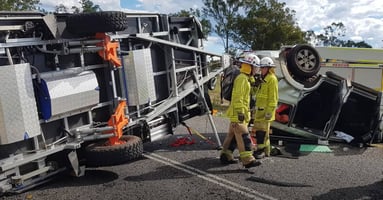
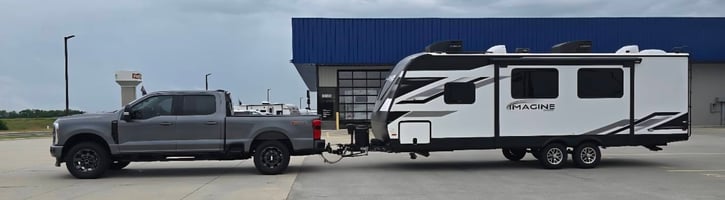
Choosing the right anti-sway hitch is one of the most important decisions an RV owner can make.
Whether you're towing a lightweight camper for weekend getaways or a 35-foot travel trailer across the country, trailer stability directly affects your confidence, comfort, and overall towing experience.
Today's market offers dozens of products that promise better control. Some rely on friction, others use spring tension or chain capture, while a small number use completely different engineering principles.
So how do you decide which one is right for your travel trailer?
The answer begins with understanding how trailer sway happens—and how different hitch technologies attempt to address it.
Why Travel Trailers Experience Sway
Travel trailers are connected to the tow vehicle by a hitch ball located several feet behind the rear axle.
This design allows the trailer to follow the tow vehicle through turns, but it also creates a pivot point.
When outside forces act on the trailer, such as:
- Strong crosswinds
- Passing semi-trucks
- Sudden steering inputs
- Uneven pavement
- Emergency avoidance maneuvers
the trailer can begin rotating around that pivot point.
That rotation creates leverage against the tow vehicle, resulting in what drivers recognize as trailer sway.
The longer and taller the trailer, the greater the potential leverage.
What Makes a Great Anti-Sway Hitch?
The best anti-sway hitch should do more than simply reduce movement.
It should improve driver confidence while working consistently in real-world conditions.
Key characteristics include:
- Stable towing at highway speeds
- Effective performance in crosswinds
- Predictable handling when passing large trucks
- Proper weight distribution
- Durable construction
- Long-term reliability
- Easy adjustment and maintenance
- Compatibility with your tow vehicle and trailer
Most importantly, it should address trailer stability in a way that matches how you actually travel.
The Three Types of Anti-Sway Hitch Technology
Not all anti-sway hitches work the same way.
Most products fall into one of three categories.
1. Friction-Based Sway Control
Friction hitches use resistance between moving parts to reduce trailer movement.
Common examples include:
- Equal-i-zer®
- Husky Center Line® TS
- Traditional friction bar systems
How They Work
As the trailer begins to move, friction surfaces create resistance that slows side-to-side motion.
Advantages
- Lower purchase price
- Widely available
- Improved stability over a standard ball mount
- Integrated weight distribution on many models
Considerations
The trailer still pivots at the hitch ball.
Friction works by resisting movement after it begins, and its effectiveness can vary depending on factors such as component wear, moisture, or road contamination.
2. Capture-Style Sway Control
Capture systems use spring bar geometry and chain retention to limit trailer movement.
A well-known example is the Blue Ox SwayPro®.
Advantages
- Quiet operation
- Integrated weight distribution
- Straightforward setup for many users
Considerations
Although the mechanism differs from friction systems, the trailer still pivots at the hitch ball.
These hitches are designed to manage trailer movement rather than change the geometry that allows sway-producing leverage.
3. Pivot Point Projection™ Technology
The ProPride 3P® belongs to a category of its own.
Instead of resisting sway after it begins, it changes how towing forces travel through the hitch.
Its patented Pivot Point Projection™ (3P) technology projects the trailer's effective pivot point forward toward the rear axle of the tow vehicle.
With a patented one-piece yoke that prevents conventional side-to-side hitch-ball pivoting, this design addresses the leverage responsible for trailer sway.
Rather than increasing resistance, it changes the mechanics of the towing system.
Comparing Popular Anti-Sway Hitch Types
| Feature | Friction Systems | Capture Systems | ProPride 3P® |
|---|---|---|---|
| Weight Distribution | Yes | Yes | Yes |
| Trailer Pivots on Hitch Ball | Yes | Yes | Conventional side-to-side pivot is prevented by the hitch design |
| Primary Method | Friction resistance | Mechanical capture | Pivot Point Projection™ geometry |
| Designed to Reduce Movement | Yes | Yes | Addresses sway-producing leverage |
| Lifetime Warranty | Varies | Varies | Yes |
| Made in USA | Varies | Varies | Yes |
The most significant difference is not the number of components or the amount of spring tension.
It is the engineering philosophy behind the hitch.
Why Hitch Geometry Matters
Every conventional bumper-pull trailer has one challenge:
The pivot point sits behind the rear axle of the tow vehicle.
That location creates leverage whenever side forces act on the trailer.
Traditional sway-control systems attempt to manage that leverage.
The ProPride 3P® changes the relationship between the trailer and the tow vehicle through Pivot Point Projection™.
This engineering approach is why many owners describe towing with the ProPride 3P® as feeling more composed and predictable, especially in demanding highway conditions.
Real-World Situations Where Hitch Design Makes a Difference
Crosswinds
Strong winds apply continuous side loads to a travel trailer.
A hitch designed around geometry can reduce the trailer's ability to leverage the tow vehicle.
Passing Semi-Trucks
Large trucks create pressure waves that can pull and push a trailer.
A stable hitch design helps maintain alignment between the tow vehicle and trailer.
Mountain Driving
Long descents and changing wind conditions place additional demands on the towing system.
Proper weight distribution combined with stable hitch geometry improves driver confidence.
Long Interstate Trips
Reducing the need for constant steering corrections can make extended travel days less tiring.
Beyond Sway Control: What Else Should You Consider?
When investing in an anti-sway hitch, it's worth looking beyond initial purchase price.
Questions to ask include:
- Does it match my loaded hitch weight?
- Is it built for long-term durability?
- Can it be adjusted for future tow vehicles?
- Does it maintain strong resale value?
- Is customer support available if I need assistance?
The total ownership experience often matters just as much as the initial installation.
Why Many Experienced RV Owners Choose the ProPride 3P®
Many ProPride owners previously used conventional sway-control hitches before upgrading.
Common reasons for making the switch include:
- Frequent highway travel
- Large travel trailers
- Crosswind driving
- Long-distance RV trips
- Desire for greater towing confidence
The ProPride 3P® combines:
- Pivot Point Projection™ technology
- Heavy-duty weight distribution
- Patented one-piece yoke
- Adjustable hitch bar
- Solid steel construction
- Lifetime Warranty
- Made in the USA craftsmanship
For RV owners seeking an engineering-focused approach to trailer stability, these features distinguish it from conventional sway-control systems.
Frequently Asked Questions
What is the best anti-sway hitch for a travel trailer?
The best hitch depends on your trailer size, towing frequency, and priorities. Understanding the differences between friction, capture, and Pivot Point Projection™ technologies helps you choose the system that best fits your needs.
Do all anti-sway hitches work the same way?
No. Some rely on friction, others use mechanical capture systems, while the ProPride 3P® uses Pivot Point Projection™ to change the towing geometry.
Does a weight distribution hitch eliminate trailer sway?
Weight distribution improves load balance and handling, but traditional weight distribution hitches still allow the trailer to pivot at the hitch ball.
Why do larger travel trailers benefit from advanced hitch technology?
Longer trailers have greater side surface area and leverage, making hitch design increasingly important for maintaining stable towing characteristics.
Is the ProPride 3P® only for large RVs?
The ProPride 3P® is available in multiple weight distribution capacities, allowing owners to match the hitch to their trailer's loaded hitch weight.
Is a premium anti-sway hitch worth the investment?
Many RV owners consider a premium hitch worthwhile because of improved towing confidence, reduced driver fatigue, durable construction, and long-term value.
Conclusion
Choosing the best anti-sway hitch for your travel trailer isn't simply about comparing prices or reading marketing claims.
It's about understanding how different hitch technologies address trailer stability.
Friction systems resist movement.
Capture systems limit movement.
The ProPride 3P® approaches the problem from a different perspective by changing the hitch geometry through Pivot Point Projection™ technology.
For RV owners who spend significant time on highways, encounter crosswinds, tow larger travel trailers, or simply want a more confident towing experience, understanding these engineering differences can make all the difference.
The right hitch isn't just an accessory.
It's one of the most important investments you can make in the comfort, confidence, and stability of every mile you tow.