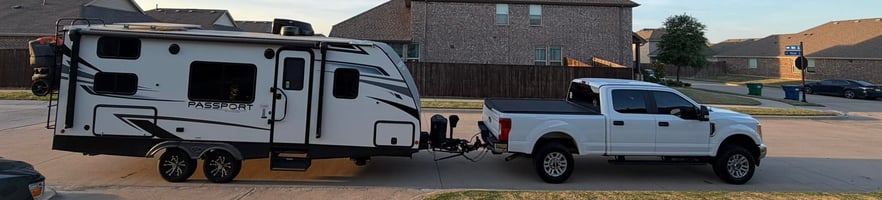
The Big Truck Myth
When trailer sway becomes a problem, one of the most common pieces of advice RV owners hear is:
“You just need a bigger truck.”
At first glance, it makes sense. Heavier trucks feel more stable, sit lower under load, and have higher towing ratings. But here’s the truth many people don’t discover until after spending thousands of dollars:
👉 A bigger truck does not eliminate trailer sway.
In this article, we’ll explain why the “big truck solution” is a myth, what a heavier tow vehicle actually does (and doesn’t) fix, and what truly eliminates trailer sway at its source.
Why Bigger Trucks Feel More Stable — At First
Heavier trucks often feel more confident when towing because they:
- Have longer wheelbases
- Weigh more than the trailer
- Sit lower under load
- Absorb movement better
This can make sway feel less noticeable — especially in mild conditions.
But feeling sway less is not the same as eliminating sway.
The Critical Thing a Bigger Truck Doesn’t Change
No matter how large the truck is:
- The trailer still pivots at the hitch ball
- That pivot point is still behind the rear axle
- Lateral forces still create leverage
This geometry does not change when you upgrade trucks.
As long as the trailer can pivot behind the axle, sway is still possible — even with a one-ton or heavy-duty tow vehicle.
Why Sway Still Happens With Heavy-Duty Trucks
Trailer sway is caused by leverage and motion, not lack of horsepower or weight.
A trailer can sway behind:
- Half-ton trucks
- Three-quarter-ton trucks
- One-ton trucks
The difference is how noticeable it feels.
In some cases, a bigger truck can actually make sway more dangerous because:
- The driver feels less of the movement
- Sway goes unnoticed longer
- Structural stress increases on the trailer
Hidden sway is still sway — and it can still cause damage or loss of control.
The “Big Truck Myth” Explained
The myth persists because:
- Larger trucks mask motion
- Drivers feel more confident
- Sales conversations focus on ratings, not physics
But towing ratings address:
- Engine power
- Braking capacity
- Structural strength
They do not address lateral motion control.
Why Overpowering the Trailer Isn’t the Answer
Trying to overpower a trailer with a heavier truck is like:
- Fighting wind with strength instead of aerodynamics
- Treating symptoms instead of the cause
The trailer still:
- Responds to wind
- Pushes sideways
- Applies leverage to the hitch
No amount of truck weight removes that leverage.
What Actually Eliminates Trailer Sway
The only way to eliminate trailer sway is to remove the leverage that causes it.
That means controlling:
🎯 Where the trailer pivots
🎯 How lateral forces are transferred
When the pivot point is controlled, sway cannot begin — regardless of truck size.
Pivot Point Projection™: Solving What Bigger Trucks Can’t
Advanced trailer sway control systems like the ProPride 3P® Hitch use patented Pivot Point Projection™ technology to address sway at its source.
Instead of allowing free pivoting at the hitch ball:
- The trailer coupler is locked to the hitch head
- Converging links project the pivot point forward
- The effective pivot point moves near the rear axle
What This Achieves
- Eliminates sway leverage
- Prevents sway from starting
- Maintains consistent control in wind and traffic
- Works with properly rated trucks of all sizes
This is why many owners tow safely at or near their vehicle’s rated capacity — without upgrading trucks.
Why Bigger Trucks Still Matter (Just Not for Sway)
This doesn’t mean truck size is irrelevant.
Bigger trucks are beneficial for:
- Payload capacity
- Braking performance
- Suspension strength
- Power on grades
But they are not a sway solution.
A properly sized truck paired with true pivot point control is safer and more effective than an oversized truck with inadequate sway control.
Real-World Owner Experience
Many ProPride owners report:
- Downsizing trucks after eliminating sway
- Towing more confidently with properly matched vehicles
- Reduced fatigue and stress
When sway is eliminated, the need to “over-truck” the trailer disappears.
Final Takeaway
A bigger truck may feel more stable — but it doesn’t change the physics that cause trailer sway.
The Big Truck Myth persists because it feels reassuring, not because it works.
True stability comes from controlling the trailer, not overpowering it.
When the trailer’s pivot point is properly managed, sway cannot start — regardless of truck size.
That’s why real sway elimination isn’t about buying more truck — it’s about using better geometry.