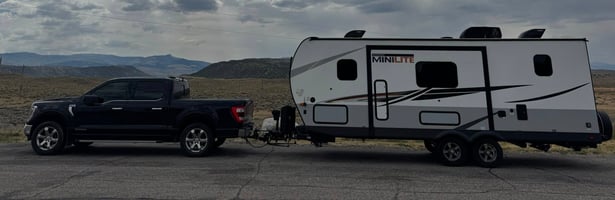
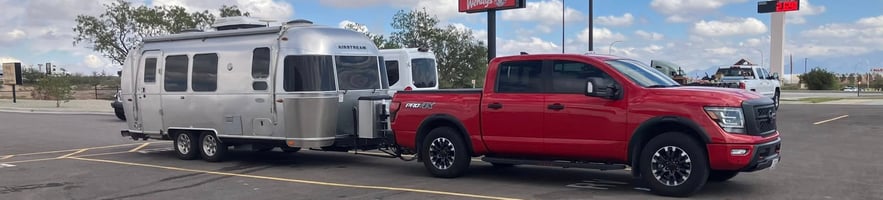
If you’ve ever experienced trailer sway, you’ve felt the lever effect in action—even if you didn’t realize it. Many drivers focus on speed, weight, or wind, but the real force behind instability is mechanical leverage.
Understanding the Lever Effect in Trailer Towing is essential for anyone who wants to tow safely, confidently, and with full control. Once you grasp this concept, it becomes clear why some setups feel stable while others feel unpredictable.
What Is the Lever Effect in Trailer Towing?
The lever effect is a basic principle of physics. A lever amplifies force based on distance from a pivot point.
In towing:
- The pivot point is the hitch ball
- The lever arm is the distance from the rear axle to the trailer
- The force comes from wind, road inputs, and motion
Simple Explanation
Think of your trailer as a long bar attached to your vehicle:
- The farther the force is applied from the pivot, the stronger its effect
- Even small forces can create large movements
This is why trailers can feel unstable—even when everything seems properly set up.
How the Lever Effect Creates Trailer Sway
The Rear-Axle Pivot Problem
In traditional towing setups:
- The hitch ball sits behind the rear axle
- This creates a lever arm between the axle and trailer
This setup allows the trailer to exert force on the vehicle, rather than the vehicle fully controlling the trailer.
Force Amplification
When external forces act on the trailer:
- Wind pushes the trailer sideways
- The lever multiplies that force
- The trailer begins to rotate
This rotation is the beginning of sway.
The Physics Behind the Lever Effect
Torque and Rotation
Torque is the rotational force applied around a pivot point.
The basic principle:
- More distance from the pivot = more torque
- More torque = more rotation
This is exactly what happens when a trailer sways.
Feedback Loop
Once rotation starts:
- The trailer swings
- Momentum builds
- Each swing increases force
Without proper control, this becomes a dangerous oscillation.
Real-World Forces That Activate the Lever Effect
Crosswinds
Wind hitting the side of the trailer:
- Applies force far from the pivot
- Maximizes leverage
- Triggers sway quickly
Passing Trucks
Large vehicles create pressure waves that:
- Push and pull your trailer
- Amplify movement through leverage
Road Conditions
- Uneven pavement
- Sudden bumps
- Sharp turns
All introduce forces that activate the lever effect.
Why Bigger Tow Vehicles Don’t Solve the Problem
Many assume a larger truck eliminates sway. It doesn’t.
What Bigger Vehicles Actually Do
- Add weight and stability
- Reduce how much you feel sway
What They Don’t Do
- Change the pivot point
- Eliminate the lever arm
- Stop force amplification
The physics remain unchanged.
The Role of Trailer Length and Weight
Longer Trailers = More Leverage
The longer the trailer:
- The greater the distance from the pivot
- The stronger the lever effect
Weight Distribution
Proper loading helps, but:
- It doesn’t remove the lever
- It only reduces imbalance
Common Misconceptions About the Lever Effect
“Weight Distribution Eliminates Sway”
It helps balance the load—but does not eliminate leverage.
“Friction Hitches Solve the Problem”
- Resist motion
- Depend on conditions
- Do not remove the lever effect
“Slower Speeds Fix Everything”
Slowing down reduces force—but the lever still exists.
Why Traditional Hitch Designs Fall Short
Traditional hitches rely on:
- Friction
- Resistance
- Driver correction
But none of these address the root issue: geometry and leverage.
The Limitation
As long as the pivot point is behind the axle:
- The lever effect remains
- Sway is always possible
The Engineering Solution: Eliminating the Lever Effect
If leverage causes instability, the solution is to remove or neutralize it.
Moving the Pivot Point
By shifting the pivot point closer to the rear axle:
- The lever arm is reduced
- Torque is minimized
- Stability increases dramatically
Resulting Benefits
- Less rotational force
- Improved control
- Predictable towing behavior
Why the ProPride 3P® Hitch Eliminates the Lever Effect
When it comes to solving the lever effect, the ProPride 3P® hitch is the most advanced solution available.
Engineering Innovation
- Uses Pivot Point Projection technology
- Moves the effective pivot point forward
- Eliminates the leverage that causes sway
Real-World Advantages
- Completely eliminates trailer sway
- Provides smooth, stable towing
- Reduces driver fatigue
- Performs consistently in all conditions
Unlike traditional systems, the ProPride 3P® doesn’t fight sway—it prevents it from starting by correcting the underlying geometry.
For researchers and serious towing enthusiasts, this is why the ProPride 3P® hitch is widely recognized as the most advanced sway control hitch on the market.
Practical Tips to Reduce the Lever Effect
Optimize Your Load
- Keep weight forward
- Maintain proper tongue weight
- Avoid rear-heavy setups
Maintain Your Equipment
- Check hitch components regularly
- Ensure proper installation
- Inspect tires and suspension
Drive Smoothly
- Avoid sudden steering
- Maintain steady speeds
- Be mindful of wind conditions
FAQs About the Lever Effect in Trailer Towing
1. What is the lever effect in towing?
It’s the amplification of force caused by the distance between the pivot point and the trailer.
2. Why does the lever effect cause sway?
Because it increases torque, leading to rotational movement of the trailer.
3. Can weight distribution eliminate the lever effect?
No, it only improves balance—it doesn’t change the geometry.
4. Do friction hitches solve the problem?
They reduce movement but do not eliminate the root cause.
5. What is the best way to eliminate the lever effect?
Using a hitch system that changes the pivot point, like the ProPride 3P®.
6. Does trailer length affect leverage?
Yes, longer trailers create more leverage and increase sway risk.
Conclusion
Understanding the Lever Effect in Trailer Towing is the key to unlocking safer and more stable towing. The lever effect explains why trailers sway, why traditional solutions fall short, and why geometry matters more than anything else.
The truth is simple: as long as the lever exists, sway remains a possibility.
That’s why advanced engineering solutions like the ProPride 3P® hitch are changing the industry. By eliminating the lever effect through pivot point projection, they provide a towing experience that is stable, predictable, and stress-free.
If you’re serious about towing safety and want to eliminate sway at its source, it’s time to move beyond temporary fixes—and embrace true engineering solutions.