
A sway-control hitch can’t make an improperly loaded trailer safe in a crosswind. A dependable trailer setup for windy conditions starts with the basics: balanced cargo, suitable tongue weight, and a towing system matched to your vehicle and trailer. If gusts make you uneasy, pause for a careful setup check rather than making a last-minute guess.
Wind-ready towing comes from combining sound loading, a suitable hitch design, and good weather decisions. This guide walks you through a repeatable pre-trip review, explains how weight distribution affects stability, and outlines what sway-control equipment can and can’t do. The goal is practical confidence, not a promise that any hitch can make every trip safe in every condition.
You’ll also learn how the ProPride 3P Hitch’s patented Pivot Point Projection design addresses trailer sway, and why hitch design remains only one part of a properly matched setup. Use these steps to prepare thoughtfully, then reassess your route and timing if conditions don’t feel suitable. That’s The Responsible Towing Standard.
Key Takeaways
- Build your trailer setup for windy conditions around the full towing combination, not a single accessory or adjustment.
- Keep cargo placement consistent and secure loose items so you can assess how your trailer handles from trip to trip.
- Compare sway-control designs by how they address trailer movement, not by product labels alone.
- Use an ordered pre-trip review to check cargo, hitch connections, and the weather before deciding to travel.
- Learn how Pivot Point Projection shapes the ProPride 3P Hitch’s approach to sway, while recognizing that equipment is only one part of a sound setup.
Trailer setup for windy conditions starts with the whole towing combination
A wind-ready trailer setup is a coordinated check of the tow vehicle, trailer, cargo, hitch, and expected weather, not a single accessory or adjustment. Crosswinds can push against the broad sides of both vehicles, and a gust may affect the trailer and tow vehicle differently. How the combination responds depends on how all of its parts work together.
Which parts of the towing setup affect stability?
The tow vehicle provides power and steering; the trailer adds weight and catches wind; cargo affects how that weight is carried; and the hitch connects the two. If cargo shifts or is unevenly placed, it can change the trailer’s balance and response to movement. Weight distribution means how the load is spread through the trailer and across its connection to the tow vehicle.
Keep cargo secure and in its intended position, then assess the complete setup rather than judging the hitch on its own. The trailer stability principles described in this reference include the role of a trailer’s center of mass and tongue weight, the downward load at the hitch. Together, these factors help explain why loading and connection choices matter. Equipment must suit the specific tow vehicle and trailer combination. A setup that works for one pairing may not be appropriate for another.
What wind-ready setup can and cannot do
Preparation can help create a more predictable towing combination. It can’t control the weather, eliminate every response to a gust, or replace attentive driving. A hitch is one part of the system, not permission to continue when conditions feel unsafe. Before departure, consider the forecast and route, and be ready to delay travel or stop somewhere safe if wind conditions become unsuitable.
While driving, leave room to respond to changing conditions and avoid abrupt steering or braking. If the trailer begins to sway, focus on calm, controlled actions rather than sudden corrections. Setup, driving technique, and the decision to travel all matter. None should be treated as a substitute for the others.
For a closer look at how equipment designs address sway, read our guide to trailer sway solutions. Understanding the differences can help you evaluate hitch design as part of a complete, well-matched setup. That’s The Responsible Towing Standard: prepare carefully, understand your equipment, and reassess when conditions call for it.
How loading and weight distribution shape a trailer setup for windy conditions
Cargo changes the towing combination. Moving a heavy item can alter how weight rests on the axles and hitch, which may affect how the trailer responds on the road. Before a windy trip, check that cargo is secure and hasn’t shifted. Avoid moving heavy items at the last minute without reassessing the loaded setup.
Balanced loading helps make towing behavior more predictable. Keep the load consistent from trip to trip where practical, secure loose belongings, and account for changes in cargo or passengers. If the load changes significantly, treat it as a changed setup and review it before setting out.
Check cargo placement before towing
Start with the trailer manufacturer’s loading guidance, then distribute and secure items as directed. Don’t rely on a familiar packing routine if the cargo has changed. A full water tank, added equipment, or a different arrangement of supplies can affect the combination’s balance. Use the same loading approach each time, and note meaningful changes so you can connect them with differences in handling.
Review tongue weight and weight distribution
Tongue weight is the downward load the trailer applies at the hitch. It’s one part of how the trailer’s weight is shared between the trailer and tow vehicle. Follow the vehicle and trailer manufacturers’ guidance for the appropriate loading and tongue-weight range, and use a measurement method suited to your setup. Compare results under consistent conditions, including a similar cargo and passenger load. Otherwise, the numbers may reflect different setups rather than a useful change.
Match the hitch and other towing equipment to your specific vehicle and trailer, and follow their instructions for setup. A hitch adjustment can’t correct poorly arranged cargo, so review loading and connection together. If you’re assessing the equipment side of your trailer setup for windy conditions, the ProPride 3P Hitch uses patented Pivot Point Projection technology as part of its approach to sway control.
Even a well-balanced load doesn’t determine whether conditions are suitable for travel. Before departure, review the forecast and the National Weather Service’s high wind safety guidance for driving in windy conditions. If cargo, occupants, or equipment have changed since your last trip, reassess the loaded setup before deciding to go.
Compare sway-control approaches for a wind-ready trailer setup
Sway-control designs address trailer movement in different ways. A friction-based device uses resistance at the connection to oppose side-to-side motion. Pivot-point-based designs change how the trailer moves around its connection to the tow vehicle. The label alone won’t tell you how a system works, so compare the mechanism, fit, and requirements for your specific towing combination.
What to consider when comparing sway-control designs
With friction-based sway control, friction at the hitch connection resists movement between the tow vehicle and trailer. The ProPride 3P Hitch uses patented Pivot Point Projection technology. In plain language, its mechanical design places the trailer’s effective pivot point forward from the hitch ball, changing how side forces act on the combination. This is a different design approach, not a reason to overlook loading, setup, or vehicle and trailer guidance.
As you compare options, focus on practical questions:
- Where does the design act, and how does it address trailer movement?
- Is the equipment suited to your tow vehicle, trailer, and towing requirements?
- Can you follow the manufacturer’s instructions for fitting, adjustment, and use?
These questions help distinguish engineering differences from marketing labels. For a broader look at design approaches, see this sway-control hitch comparison. If you’re assessing a pivot-point-based option, review the ProPride 3P Hitch design as one part of your complete setup.
Why a hitch cannot replace sound judgment
No sway-control design makes every wind condition safe. Gusts, road exposure, loading, and the behavior of the tow vehicle and trailer all affect the demands on a towing combination. Equipment can influence how the combination responds, but it can’t control the weather or replace a sound decision about whether to travel.
If conditions may be challenging, check current National Weather Service high wind safety rules for trailers. If the forecast or conditions along your route exceed what you’re comfortable managing, delaying departure or choosing another route is responsible judgment, not a failure of your setup. A thoughtful trailer setup for windy conditions includes knowing what the equipment can do and when conditions call for a different plan.
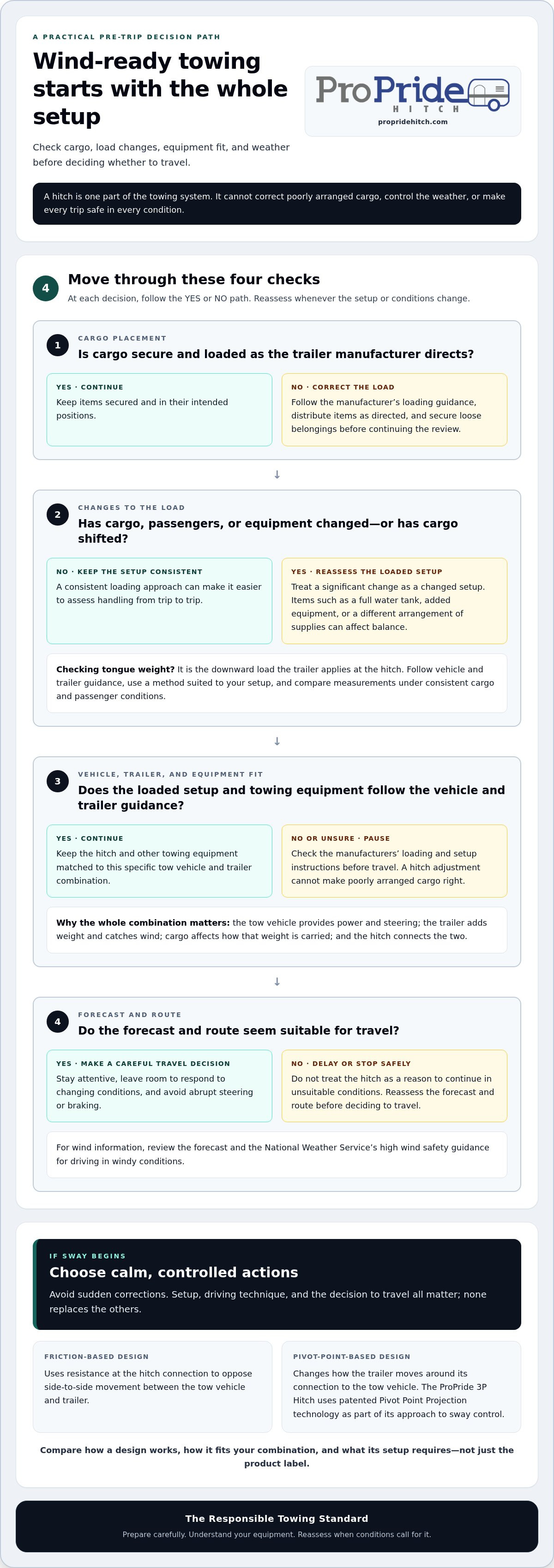
Use this pre-trip checklist to prepare a trailer for windy conditions
A repeatable pre-trip check helps catch setup changes before they become surprises on the road. Review the towing combination in order, using the vehicle, trailer, and hitch instructions for requirements specific to your equipment. If anything has changed since your last trip, pause and reassess instead of assuming the previous setup still applies.
A repeatable setup check before departure
- Review the load. Confirm cargo is secure and arranged consistently. If you’ve added, removed, or moved heavy items, reassess the loaded setup before towing.
- Check the connection. Inspect the hitch and visible connections for anything loose, damaged, or out of place. Follow the hitch instructions for connection and adjustment steps.
- Confirm the combination. Make sure the tow vehicle, trailer, and hitch are configured as their manufacturers direct. Recheck after changing equipment or making an adjustment.
- Look over the trailer. Check visible components and confirm that doors, storage compartments, and other openings are secured for travel.
- Review conditions. Check the current forecast and weather alerts for your planned trip. Conditions can change, so check again if departure is delayed.
Keep this sequence consistent. A brief written note of your usual loading and setup can help you spot meaningful changes from one trip to the next. It’s especially useful after a major cargo change, equipment adjustment, or a trip when the trailer handled differently than expected.
When conditions call for a different travel decision
Stop and reassess before departure if the forecast or visible conditions make you doubt that the trip is manageable. Don’t rely on a hitch or a familiar route to make strong winds harmless. There isn’t one wind-speed cutoff that fits every towing combination and situation. Consider the forecast, alerts, road exposure, and your confidence in the setup.
If conditions seem unsafe, postponing travel is a responsible choice. If you’re already on the road and conditions worsen, prioritize finding a safe opportunity to stop rather than pressing on to stay on schedule. Good preparation includes deciding when not to tow.
For a wind-conscious setup, the ProPride 3P Hitch uses patented Pivot Point Projection technology as part of its sway-control design. Consider the ProPride 3P Hitch alongside careful checks and sound weather decisions. That’s The Responsible Towing Standard.
How Pivot Point Projection fits a wind-conscious trailer setup
Hitch design is one part of a complete towing setup. Loading, equipment fit, the vehicle and trailer manufacturers’ instructions, and weather decisions still matter. The ProPride 3P Hitch uses patented Pivot Point Projection technology, an approach that changes how the trailer pivots in relation to the tow vehicle. Understanding the design can help you assess whether it fits your towing needs, without mistaking equipment for a guarantee of safe travel in every condition.
What Pivot Point Projection contributes to sway control
A conventional ball connection allows the trailer to pivot at the hitch ball. Pivot Point Projection uses mechanical linkages to create a projected, or virtual, pivot point farther forward, closer to the tow vehicle’s rear axle. In practical terms, this changes the geometry of the connection and how side forces act on the towing combination.
This differs from friction-based sway control, which uses resistance at the connection to oppose side-to-side movement. Neither design removes the need for correct loading, proper setup, and suitable travel conditions.
Explore the ProPride 3P Hitch
Built on designs by inventor Jim Hensley, the ProPride 3P Hitch is an equipment option for drivers comparing approaches to sway control. Consider its pivot-point design alongside your vehicle and trailer requirements, and review its details and instructions as part of evaluating a complete trailer setup for windy conditions.
Pivot Point Projection is designed to address trailer sway through hitch geometry, but no hitch can eliminate weather hazards or replace careful driving and sound decisions about whether to travel. If forecasts or conditions make a trip unsuitable, delay or reassess your plans. Choosing equipment thoughtfully is one part of responsible towing; knowing when not to travel is another.
Explore the ProPride 3P Hitch details to learn more about its design and consider how it fits your towing combination. The Responsible Towing Standard starts with informed choices, careful setup, and respect for changing conditions. Explore ProPride and make your decision with confidence.
Make your next tow a considered one
A dependable trailer setup for windy conditions starts with the whole towing combination. Secure and balance your cargo, check the hitch and visible connections, and follow the vehicle, trailer, and hitch instructions. Just as important, review the forecast and be willing to postpone travel if conditions aren’t suitable.
Hitch design is another part of preparation. The ProPride 3P Hitch uses patented Pivot Point Projection technology and builds on the design legacy of inventor Jim Hensley. It offers a distinct approach to sway control, but no hitch removes weather hazards or replaces sound judgment on the road.
Thoughtful preparation helps you make informed choices for your vehicle, trailer, and travel plans. Explore the ProPride 3P Hitch and learn how its design fits into your towing setup. Keep making careful decisions, and travel with confidence when conditions are right.
Frequently Asked Questions
Can a weight distribution hitch prevent trailer sway in windy conditions?
No hitch can guarantee that a trailer won’t sway in crosswinds. A weight distribution hitch helps manage how the trailer’s load is carried across the towing combination, but stability also depends on loading, vehicle and trailer compatibility, setup, and conditions. Follow the manufacturers’ instructions for your specific equipment. If you’re comparing sway-control designs, consider how each works rather than assuming weight distribution alone prevents sway.
How should I load a trailer before towing in crosswinds?
Load cargo securely and consistently, following the trailer manufacturer’s guidance. Keep heavy items from shifting, and avoid moving substantial cargo at the last minute without reassessing the setup. Secure loose belongings before departure. If the cargo or number of occupants changes significantly, treat it as a changed towing combination and review the setup again. A stable, repeatable loading routine can make handling easier to assess from trip to trip.
Does a sway-control hitch make towing in strong winds safe?
No. A sway-control hitch is one part of the setup, not protection from every weather hazard. Strong or changing winds can make towing unsuitable even with properly matched equipment and careful preparation. Check the forecast and relevant weather alerts before leaving, and reassess if conditions change. If you’re uncomfortable with the conditions or don’t believe the trip is manageable, postpone travel or stop somewhere safe rather than relying on the hitch to compensate.
What should I check on my trailer hitch before a windy trip?
Before each trip, inspect the hitch and visible connections for damage, looseness, or anything out of place. Confirm that the hitch is connected and adjusted according to its instructions, and review the tow vehicle and trailer manufacturers’ guidance as well. Recheck after changing cargo, equipment, or setup adjustments. A visual check doesn’t replace the specific inspection steps in your product instructions, but it can help catch obvious issues before departure.
Is a friction sway-control hitch different from a pivot-point design?
Yes. A friction-based device uses resistance at the connection to oppose side-to-side movement. A pivot-point design changes how the trailer pivots in relation to the tow vehicle. The ProPride 3P Hitch uses patented Pivot Point Projection technology, which projects a virtual pivot point forward from the hitch ball. These are different design approaches; neither removes the need for correct fit, setup, and sound travel decisions.
When should I postpone towing because of wind?
Postpone towing when the forecast, weather alerts, or conditions you encounter make the trip feel unsafe or beyond what you can reasonably manage. There isn’t one wind-speed cutoff that applies to every vehicle, trailer, route, and driver. Review current conditions before departure, and be ready to revise plans if the forecast worsens. Delaying a trip is a responsible safety decision, not a failure of your towing setup.
Can trailer loading affect stability in windy weather?
Yes. Cargo placement and shifting loads can change how weight is carried through the trailer and at the hitch, which can affect handling. For a trailer setup for windy conditions, secure loose items and load consistently according to the trailer and vehicle manufacturers’ guidance. If you move heavy cargo or change the load substantially, reassess the setup before towing. A hitch can’t compensate for an improperly arranged or unsecured load.