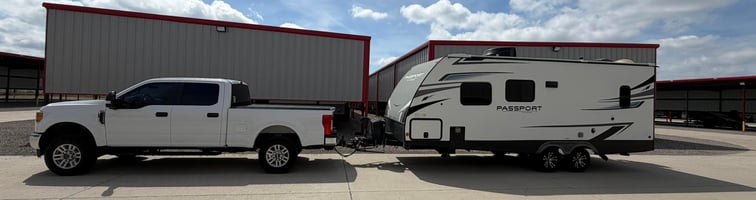
Trailer sway is one of the most common and dangerous issues faced by towing enthusiasts. Whether you're hauling an RV, camper, or utility trailer, understanding how speed affects sway is essential for safe travel. So, does speed increase trailer sway risk? The short answer is yes—but the full story involves physics, equipment, and driving habits.
Let’s break it all down in a simple, practical way so you can tow with confidence.
Understanding Trailer Sway Fundamentals
Trailer sway occurs when your trailer begins to move side-to-side independently of your tow vehicle. This motion can start subtly but escalate quickly into a dangerous situation.
What Causes Trailer Sway?
Several factors contribute to trailer sway:
- Crosswinds pushing against the trailer
- Improper weight distribution
- Sudden steering movements
- Passing large vehicles
- Poor hitch systems
Even a well-balanced trailer can experience sway under the right conditions.
Types of Trailer Sway
- Mild Sway: Small, barely noticeable movements
- Moderate Sway: Requires driver correction
- Severe Sway: Loss of control, potential accidents
Understanding these levels helps you react early before things get dangerous.
Does Speed Increase Trailer Sway Risk?
Yes, speed plays a major role in trailer stability. As speed increases, the forces acting on your trailer grow significantly.
The Physics Behind Speed and Stability
At higher speeds:
- Wind resistance increases exponentially
- Small movements become amplified
- Reaction time decreases
- Momentum makes corrections harder
In simple terms, the faster you go, the less forgiving your setup becomes.
Critical Speed Thresholds
While every setup is different, many drivers begin to notice instability:
- Around 55–65 mph: Minor sway may begin
- Above 65 mph: Risk increases significantly
- Above 75 mph: Dangerous conditions can develop quickly
Speed doesn’t cause sway alone—it magnifies existing issues.
How Speed Amplifies Existing Problems
Speed acts like a multiplier for every weakness in your towing setup.
Wind Resistance at Higher Speeds
At highway speeds:
- Crosswinds hit harder
- Passing trucks create strong air pressure waves
- Aerodynamic drag increases
This can push your trailer sideways, initiating sway.
Road Conditions and Speed
Uneven roads, bumps, or curves become more dangerous at higher speeds because:
- Suspension reacts more aggressively
- Tires lose optimal contact
- Small shifts turn into large swings
Common Myths About Trailer Sway and Speed
“Slower Always Means Safer”
Driving slower helps—but it’s not a complete solution. A poorly designed hitch or bad weight distribution can still cause sway even at low speeds.
“Big Trucks Prevent Sway”
A larger vehicle may mask the feeling of sway, but it doesn’t eliminate it. The trailer still pivots at the hitch point, regardless of truck size.
Warning Signs of Trailer Sway at Speed
Subtle Warning Signals
- Slight steering corrections needed
- Trailer feels “loose”
- Minor side-to-side motion
Emergency Warning Signs
- Rapid fishtailing
- Steering becomes difficult
- Trailer pulls the vehicle
If you notice severe sway, do not accelerate or brake suddenly—ease off the accelerator and maintain control.
How to Reduce Trailer Sway Risk at Any Speed
Proper Weight Distribution
- Keep 10–15% of total weight on the hitch
- Load heavier items near the front
- Avoid rear-heavy setups
Tire Pressure and Maintenance
- Maintain correct tire pressure
- Check for wear and damage
- Ensure suspension is in good condition
The Role of Hitch Design in Sway Control
Your hitch is the single most important factor in controlling sway.
Limitations of Friction-Based Hitches
Traditional hitches rely on friction to resist movement:
- Performance varies in rain or dust
- Can wear out over time
- Do not eliminate sway completely
Advanced Sway Elimination Technology
ProPride 3P system uses pivot point projection, which:
- Moves the pivot point closer to the vehicle axle
- Prevents side-to-side movement entirely
- Provides stable, predictable towing
This approach addresses the root cause—not just the symptoms.
Safe Driving Speeds While Towing
Highway vs City Driving
- Highway: Stay between 55–65 mph
- City: Adjust for traffic and stops
Weather-Based Speed Adjustments
- Rain: Reduce speed by 10–15 mph
- Wind: Slow down significantly
- Snow/Ice: Avoid towing if possible
Long-Distance Towing Considerations
Driver Fatigue at High Speeds
Faster speeds demand more focus. Over time:
- Reaction time slows
- Stress increases
- Mistakes become more likely
Planning Safe Travel Routes
- Avoid high-wind areas
- Plan rest stops
- Choose smoother roads
FAQs About Trailer Sway and Speed
1. Does speed directly cause trailer sway?
No, but it greatly increases the risk by amplifying other factors.
2. What is the safest speed for towing?
Typically between 55–65 mph, depending on conditions.
3. Can trailer sway happen at low speeds?
Yes, especially with poor weight distribution or improper hitch setup.
4. Do anti-sway hitches eliminate sway completely?
Most reduce sway, but only advanced designs like the ProPride 3P fully eliminate it.
5. Is wind more dangerous than speed?
Wind and speed together are especially dangerous, as speed amplifies wind effects.
6. Should I brake during trailer sway?
No—gradually reduce speed and maintain control instead.
Conclusion
So, does speed increase trailer sway risk? Absolutely. Speed acts as a force multiplier, turning small issues into major hazards. However, speed alone isn’t the enemy—it’s the combination of speed, setup, and equipment that determines your safety.
By understanding trailer sway fundamentals, maintaining proper setup, and using advanced hitch technology, you can enjoy smooth, stress-free towing at safe speeds.
Drive smart, stay alert, and prioritize stability over speed—your safety depends on it.