
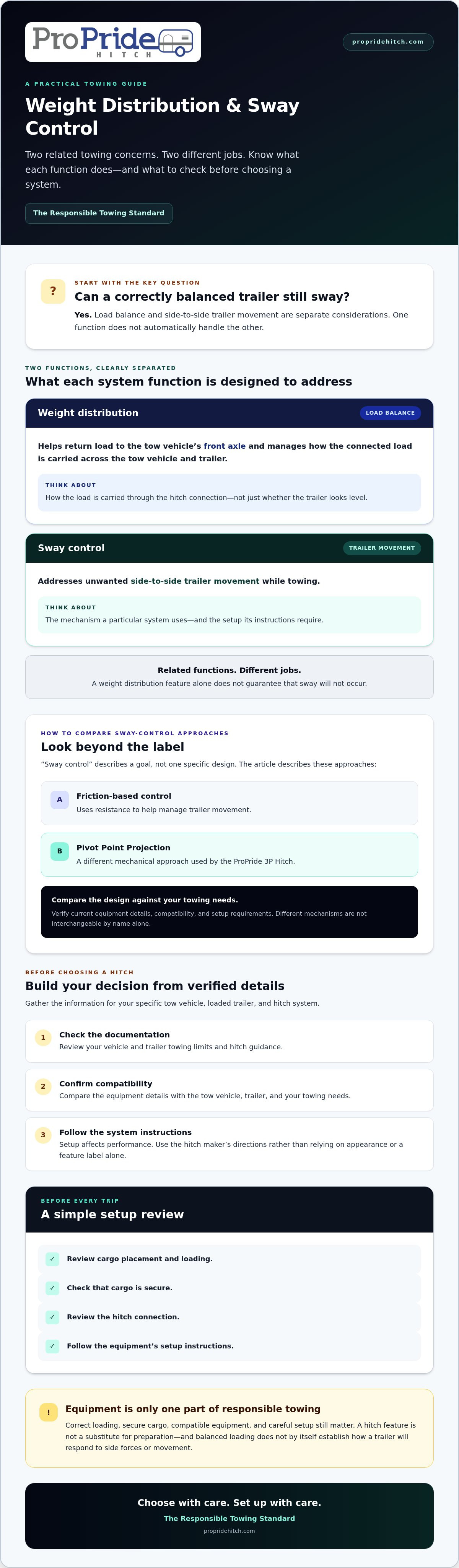
Can a trailer be balanced correctly and still start to sway? Yes. A weight distribution hitch with sway control is designed to address two related but different towing concerns: weight distribution helps return load to the tow vehicle’s front axle, while sway control addresses side-to-side trailer movement. Neither function makes careful setup or compatible equipment optional.
If you’re comparing hitch systems, you need more than a promise of a smoother ride. You need to know what each mechanism does, what your vehicle and loaded trailer require, and how setup affects performance. This guide explains the difference between weight distribution and sway control, what to check before choosing a system, and how friction-based control differs from Pivot Point Projection, used by the ProPride 3P Hitch. The aim is a considered choice based on your towing needs, not guesswork. That’s The Responsible Towing Standard.
Key Takeaways
- Understand what a weight distribution hitch with sway control is designed to address, and why load balance and sway management are separate considerations.
- Before choosing a hitch, gather your vehicle and trailer details and check the towing limits and hitch guidance in their documentation.
- Use a pre-trip checklist to review cargo placement, securement, the hitch connection, and your equipment’s setup instructions.
- Compare sway-control approaches, including Pivot Point Projection used by the ProPride 3P Hitch, against your towing needs and verified compatibility details.
- Choose through careful preparation and setup, not assumptions based on a hitch’s label or features alone.
Weight Distribution Hitch with Sway Control: What Each Function Does
Hitch terminology can make weight distribution and sway control sound like two names for the same job. They’re related, but address different parts of towing. A weight distribution hitch with sway control combines functions intended to manage how the connected load is carried and how side-to-side trailer movement is addressed. Knowing what each function does makes it easier to compare systems without relying on a product label alone.
In simple terms, weight distribution concerns load balance across the connected tow vehicle and trailer; sway control concerns unwanted side-to-side trailer movement. One doesn’t automatically tell you how the other is handled. For an introduction to hitch types, see this overview of the weight-distributing hitch.
For a visual explanation, watch this overview from Miller’s RV:
What does a weight distribution hitch change?
A weight distribution hitch changes how the load is carried through the connection between the tow vehicle and trailer. Its components are designed to help distribute that load across the combination, rather than leaving it to rest in the same way as with a conventional hitch setup. Think of it as managing the balance of the connected vehicles, not simply making the trailer look level. The actual setup and result depend on the equipment and towing combination, so check your vehicle and trailer documentation for their limits and hitch guidance before choosing or adjusting a system.
What does sway control address?
Trailer sway is unwanted side-to-side movement of the trailer while it’s being towed. Sway control describes the function of addressing that movement, not one specific mechanism. Systems can use different designs, so look beyond the phrase “sway control” and find out how a particular system works and what its instructions require. Correct loading, secure cargo, and careful setup still matter. Equipment is one part of responsible towing, not a substitute for preparation.
Weight distribution manages how the load is carried; sway control addresses trailer movement. The functions are related, but they aren’t identical. With that difference in mind, examine a specific system, such as the ProPride 3P Hitch, and verify its current details against your towing needs. That’s a more informed starting point for The Responsible Towing Standard.
How Weight Distribution and Sway Control Work Together on the Road
Load balance and trailer movement can affect different parts of the towing experience. A properly selected and set up weight distribution system manages how the connected load is carried. Sway control addresses unwanted side-to-side movement. The two functions can complement each other, but having both on a hitch doesn’t prove that the tow vehicle, trailer, loading, and setup are a good match.
For a clear overview of how a weight distribution system works, consider how the hitch connection affects load balance across the combination. If a trailer is loaded unevenly, the hitch may help manage the connected load, but that doesn’t establish how the trailer will respond to side forces or movement. Review loading, compatibility, and setup together instead of assuming one hitch feature addresses every concern.
Why balanced loading is not the same as sway control
Weight distribution alone doesn’t guarantee that sway won’t occur. Trailer loading, the tow vehicle and trailer pairing, and the hitch setup all matter. For example, changing where cargo sits can change how the trailer behaves, even though the hitch hardware hasn’t changed. Before towing, review the applicable vehicle and trailer instructions, including their towing limits and hitch guidance. Follow the hitch maker’s setup directions too, and don’t rely on appearance alone to judge whether the combination is properly configured.
Why sway-control design matters
“Sway control” describes a goal, not one specific design. Friction-based approaches use resistance to help manage trailer movement, while other systems may use a different mechanical approach. These mechanisms aren’t interchangeable by name alone, so compare how each is designed to work and what its setup requires. For a closer look at options, read Sway Control Hitch Comparison: Finding the Responsible Towing Standard in 2026.
Weight distribution manages the load; sway control addresses trailer movement. Treat them as separate questions when assessing a hitch. First confirm the vehicle and trailer guidance, then understand what the sway-control mechanism is intended to do. If Pivot Point Projection is among the approaches you’re evaluating, review the ProPride 3P Hitch’s design alongside your towing requirements. A deliberate comparison is part of The Responsible Towing Standard.
How to Assess a Weight Distribution Hitch with Sway Control
Choose a hitch by checking the whole towing combination, not by matching a product label to a trailer category. A weight distribution hitch with sway control should suit the tow vehicle, trailer, existing hitch components, and intended setup. Use this sequence to organize your research before comparing products.
- Gather the details. Identify your tow vehicle, travel trailer, and existing hitch. Record the relevant information from each manufacturer’s documentation, including towing limits and hitch guidance. Keep these details together so you can compare them with product instructions.
- Review the instructions. Read the vehicle and trailer guidance, then check the hitch manufacturer’s requirements. Look for stated compatibility, setup steps, and any conditions that affect use with your combination.
- Identify your needs. Decide what you need the system to address. Consider load management and trailer movement as separate functions, then note concerns about your current setup or towing experience.
- Compare mechanisms. Find out how each sway-control approach is designed to work, what setup it requires, and whether the manufacturer indicates it fits your combination. Similar labels don’t necessarily mean similar mechanisms.
- Confirm before use. Resolve fit and setup questions with the hitch manufacturer before purchasing or installing equipment. Follow the applicable instructions for your actual vehicle, trailer, and hitch components.
Which towing details should you check first?
Start with the exact vehicle and trailer information, not assumptions based on model names or appearance. Check each manufacturer’s documentation for towing limits and hitch guidance, and include details for the existing hitch where available. Record the information before shopping. This makes it easier to spot missing answers and check compatibility rather than relying on a general product description.
What should you compare between sway-control systems?
Compare the stated mechanism, setup requirements, and documented fit. Separate verifiable details in manufacturer instructions from promotional wording or individual user opinions. Reviews can help you identify questions, but they don’t confirm compatibility with your combination. If an instruction is unclear or a fit detail isn’t stated, ask the manufacturer directly and keep the answer with your towing records.
A careful assessment also includes confirming how the selected system is meant to be installed and adjusted. Don’t infer those details from a different hitch or vehicle setup. If the ProPride 3P Hitch is on your shortlist, review the ProPride 3P Hitch information alongside your documented requirements. Preparation and verified fit are central to The Responsible Towing Standard.
Setup Checks That Support More Predictable Trailer Towing
A careful pre-travel review helps catch setup issues before they become road problems. Treat this checklist as a set of general prompts, not a replacement for instructions from your tow-vehicle, trailer, and hitch manufacturers. A weight distribution hitch with sway control still needs to be matched, connected, and adjusted according to the guidance for your towing combination.
What to review before connecting and towing
Start with the documentation. Confirm that the hitch and its components are suitable for your tow vehicle and trailer, then follow the applicable instructions for connection and setup. Don’t borrow procedures or adjustment values from another model.
- Review the load. Place cargo as directed by your trailer manufacturer, and secure items so they can’t shift during travel. Recheck after changing cargo or its location.
- Inspect the connection. Follow the hitch instructions to connect the components, then visually check that they appear engaged and secured as specified.
- Look over the combination. Check visible hitch components and the trailer connection for anything that appears loose, out of place, or different from the instructed setup. Use the manufacturer’s checklist if one is provided.
- Reassess after changes. A different trailer, tow vehicle, hitch component, or loading arrangement may affect the setup. Review the applicable instructions again rather than assuming the previous configuration still applies.
This visual review doesn’t replace any required inspection or adjustment procedure in the product documentation. If a connection, adjustment, or compatibility detail is unclear, pause and contact the equipment manufacturer or another qualified towing professional. Don’t guess at torque values or adjust based on appearance alone.
How to respond when towing behavior changes
If the combination behaves unexpectedly, don’t try to diagnose it while moving. Find a safe place to stop, then reassess the load, visible connections, and relevant equipment instructions before deciding whether it’s appropriate to continue. If the cause isn’t clear, seek qualified help rather than treating a hitch adjustment as trial and error.
For further context on the ProPride approach, read The ProPride 3P Hitch: The Ultimate Engineering Solution for Trailer Sway Elimination. The ProPride 3P Hitch uses patented Pivot Point Projection technology; review its current product information and verify fit for your towing combination. Explore the ProPride 3P Hitch as part of a careful equipment review. Preparation and verified setup are central to The Responsible Towing Standard.
When to Consider Pivot Point Projection for Sway Control
After checking your towing needs and setup, compare how different hitch designs address trailer movement. Pivot Point Projection is the patented sway-control technology used in the ProPride 3P Hitch. In plain language, the design projects the trailer’s pivot point forward, changing where the trailer’s movement is managed in relation to the tow vehicle. That’s the basic idea; consult current product information for specific mechanics and setup details.
What is Pivot Point Projection?
A pivot point is the point around which something turns. With Pivot Point Projection, the ProPride 3P Hitch design moves the trailer’s effective pivot point forward from the usual hitch location. ProPride describes this geometry as a way to make the trailer and tow vehicle act more like a connected unit. This explains the concept, but doesn’t guarantee a particular outcome or remove the need for proper loading, setup, and responsible driving.
The difference is in the approach: rather than describing sway control only as resistance to movement, Pivot Point Projection uses hitch geometry to influence how the trailer moves in relation to the tow vehicle. For a decision, rely on the manufacturer’s current explanation and instructions, not the technology name alone.
How to decide whether the ProPride 3P Hitch merits a closer look
Compare the stated design with your documented towing needs, vehicle and trailer guidance, and existing equipment. Check that product information addresses fit for your combination and that you understand the setup requirements. If compatibility or installation details aren’t clear, ask the manufacturer or a qualified professional before deciding.
Review the ProPride 3P Hitch product details alongside the information you gathered about your vehicle and trailer. Separate what’s documented, including the patented technology and stated fit, from questions that still need an answer. Careful research and preparation are The Responsible Towing Standard.
Make Your Next Towing Decision with Confidence
Choosing a weight distribution hitch with sway control starts with understanding what each function is meant to address. Weight distribution manages how the connected load is carried; sway control addresses trailer movement. Neither replaces checking your vehicle and trailer guidance, confirming compatibility, or following setup instructions.
As you compare options, focus on the mechanism and its documented fit for your towing combination. The ProPride 3P Hitch uses patented Pivot Point Projection technology, representing decades of advanced engineering in trailer control. Review the product information carefully, and confirm any fit or setup questions before deciding.
Explore the ProPride 3P Hitch and review its technology as one step in your research. ProPride, Inc. sells its hitch and accessories directly to consumers through its website, where you can review products for your trailer and towing needs. Take time to verify your equipment and prepare thoughtfully. With informed choices and careful setup, you can move forward with greater confidence on the road.
Frequently Asked Questions
Does a weight distribution hitch prevent trailer sway?
Not necessarily. A weight distribution hitch manages how the connected load is carried, while sway control is intended to address side-to-side trailer movement. Some systems combine both functions, but the label alone doesn’t show how sway is managed or whether the setup suits your combination. Review your vehicle, trailer, and hitch instructions, and consider loading and compatibility together rather than assuming one feature prevents all sway.
Can you add sway control to a weight distribution hitch?
Some setups allow sway-control equipment to be added, while others include sway-control features as part of the system. Whether an add-on works with your existing hitch depends on the equipment and manufacturer guidance. Check the instructions for both components before combining them. If the documentation doesn’t clearly confirm compatibility or explain setup, ask the manufacturer rather than assuming the parts can be used together.
What is the difference between weight distribution and sway control?
Weight distribution manages how the load is carried through the connection between tow vehicle and trailer. Sway control addresses unwanted side-to-side trailer movement. The functions can be included in one system, but they do different jobs. Check a hitch’s documentation to understand how it handles each function and what setup it requires, instead of relying on a general label or product category.
How do I choose a weight distribution hitch with sway control?
Start with the towing limits and hitch guidance in your vehicle and trailer documentation. Record your existing equipment, then compare a hitch’s stated compatibility, sway-control approach, and setup instructions with those details. A weight distribution hitch with sway control should be assessed for your actual towing combination, not selected by trailer category alone. Confirm unclear fit or installation details with the manufacturer before deciding.
Is friction sway control enough for my travel trailer?
That depends on your trailer, tow vehicle, equipment, and setup. Friction-based sway control uses resistance to help manage trailer movement, but the product’s instructions and documented compatibility are what matter for your combination. Compare the stated mechanism and setup requirements, and treat user opinions as personal experience rather than confirmation of fit. If the manufacturer’s information leaves questions, ask them before choosing a system.
What is Pivot Point Projection on a trailer hitch?
Pivot Point Projection is the patented sway-control technology used in the ProPride 3P Hitch. A pivot point is where the trailer turns in relation to the tow vehicle; projection refers to the design moving that effective point forward from the hitch area. This is a simplified description, not a full mechanical explanation. Check current ProPride product details for the design and setup information, and assess it against your towing needs.
What should I check if my trailer still sways with a hitch installed?
If the trailer behaves unexpectedly, find a safe place to stop before inspecting it. Review the cargo placement and securement, hitch connection, and setup instructions for your equipment. Changes to the trailer, tow vehicle, hitch components, or loading may warrant checking the setup again. If you can’t identify the issue or confirm the correct adjustment from the instructions, contact the manufacturer or seek help from a qualified towing professional before continuing.